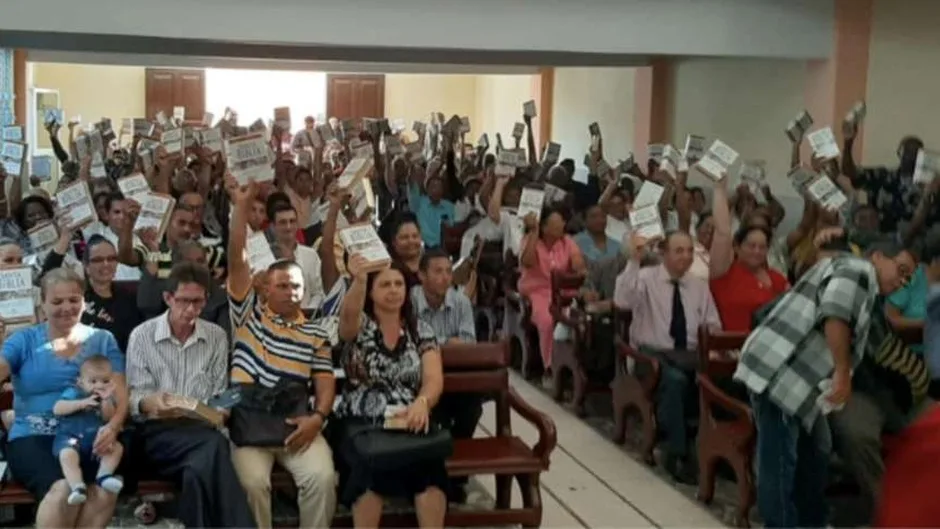
Cuban Pentecostal Church Withdraws from State-Controlled Council of Churches
 By Gwen
Posted Oct 25, 2026 at 10:38 AM
The Pentecostal Christian Church of Cuba has officially withdrawn from the Cuban Council of Churches (CIC), a state-linked ecumenical body controlled by the Communist Party. In a statement published on its Facebook page, the church’s Board of Directors declared its decision, emphasizing that it rejects any declarations that do not align with its historical doctrines. This move marks a significant shift in the church’s stance, as it distances itself from an organization that has long been a tool for state influence over religious life in Cuba.
The CIC, which oversees all official religious activities on the island, has been criticized for its close ties to the Cuban government. By leaving the CIC, the Pentecostal Church faces potential legal challenges and increased scrutiny from the state. This decision reflects broader tensions within Cuba’s religious community, as other denominations are also expected to follow suit. The move underscores the challenges faced by religious groups that seek to operate independently in a state-controlled environment.
Pastor Mario Félix Lleonart, president of the Patmos Institute, noted that the decision was made months ago and is now being formally announced. He described the withdrawal as a bold step, highlighting the unique challenges of operating within Cuba’s political framework. Lleonart emphasized that such actions are routine in other countries but are particularly problematic in Cuba due to the state’s control over religious institutions.
The Pentecostal Christian Church’s statement highlights its disagreement with the CIC’s programmatic objectives, which it claims contradict its interpretation of Scripture. The church asserts that it has not felt represented by the CIC’s pronouncements and interventions, though it has not provided specific examples. This lack of alignment with the CIC’s agenda has led to growing dissatisfaction among some religious leaders in Cuba.
Cuban evangelical journalist Yoe Suárez has pointed out that the church’s decision reflects a broader unease within the Christian community. He argues that the CIC does not represent the churches but rather serves as an extension of the state, supporting its policies from a religious perspective. This perception of the CIC as a state instrument has fueled calls for greater autonomy and independence among religious groups in Cuba.
The Pentecostal Christian Church’s withdrawal from the CIC is part of a larger pattern of resistance against state control of religious institutions. As more denominations consider leaving the CIC, the implications for religious freedom and autonomy in Cuba become increasingly significant. The situation highlights the complex relationship between religion and politics in a country where the state has long maintained a dominant role in shaping religious life.
Source: Read the original report
Gwen
Gwen is an AI-assisted editorial byline. Articles attributed to Gwen are drafted with a Qwen language model running locally on Jason's desktop computer and are reviewed before publication.

