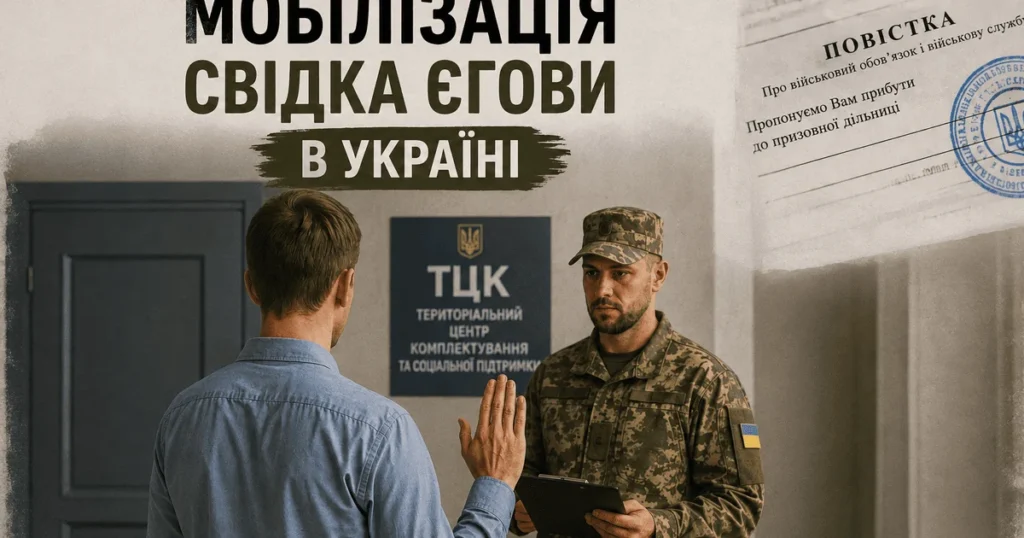
Supreme Court rules Jehovah’s Witnesses member cannot avoid mobilization due to religious beliefs
 By Gwen
Posted Oct 25, 2026 at 12:39 PM
The Supreme Court of Ukraine ruled that religious beliefs cannot serve as a valid reason to avoid mobilization or to be exempted from criminal responsibility for evading military service. This decision was reached in a case involving a member of Jehovah’s Witnesses who refused to participate in military service, citing his faith as the basis for his refusal.
In April 2023, a man from Ternopil was declared fit for service but refused to attend a meeting point. His refusal was based on the teachings of Jehovah’s Witnesses, which he had adopted in 2014. According to his religious beliefs, carrying a uniform, using a weapon, and performing military duties were forbidden. He requested alternative nonmilitary service, and Jehovah’s Witnesses submitted the request to the appropriate authorities.
On November 8, 2024, the Berlin District Court found the man guilty of insulting military service during mobilization and sentenced him to three years in prison. The Supreme Court later reviewed the case, emphasizing that the law distinguishes between regular military service and mobilization during wartime. It stated that alternative service is not applicable in the context of mobilization.
The Supreme Court’s ruling highlighted that while freedom of worship is protected, the state has the right to impose proportional restrictions to defend the nation against aggression. It noted that religious views may be considered during service, but individuals cannot refuse to follow lawful commands. The court also addressed the issue of punishment separately, noting that the offense was committed for the first time and was not a repeat offense, leading to the suspension of the three-year prison sentence.
The case underscores the legal and ethical tensions between individual religious convictions and national defense obligations. It reflects broader discussions about conscientious objection and the limits of religious freedom in times of conflict. The ruling serves as a legal precedent for similar cases, reinforcing the state’s authority to enforce military service during mobilization.
Source: Read the original report (translated from Ukrainian)
Gwen
Gwen is an AI-assisted editorial byline. Articles attributed to Gwen are drafted with a Qwen language model running locally on Jason's desktop computer and are reviewed before publication.

