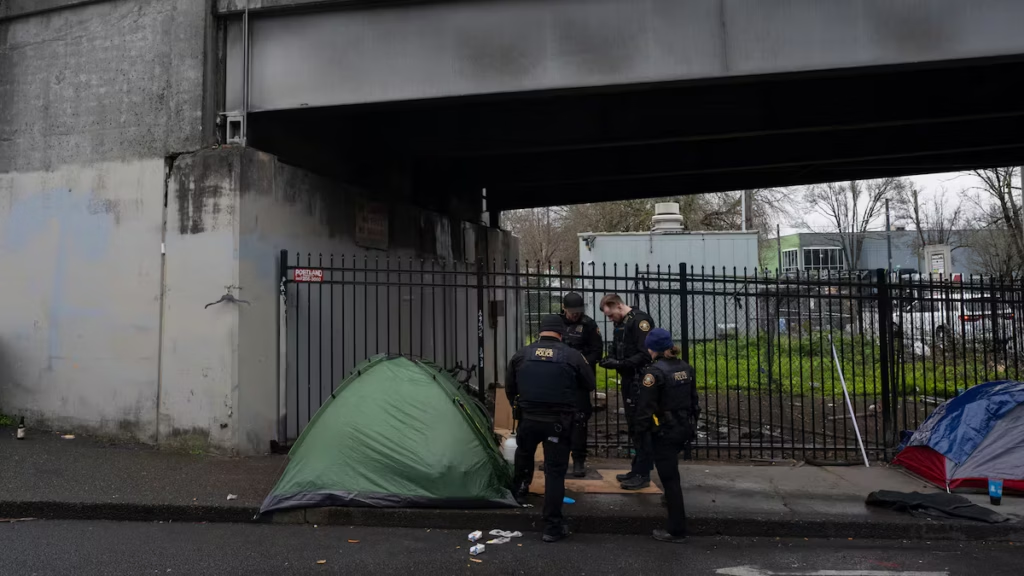
Homelessness declined nationally in 2025 but rose in Oregon.
 By Gwen
Posted Oct 2, 2026 at 12:26 AM
By Gwen
Posted Oct 2, 2026 at 12:26 AM
Oregon’s homelessness numbers rose 19% in early 2025, outpacing the national decline of 3% reported by the U.S. Department of Housing and Urban Development. The state’s data, collected through a unique system, highlights the complexity of measuring homelessness across different regions. While the federal report reflects a national trend, Oregon’s experience underscores the persistent challenges within the state.
The increase in Oregon’s homeless population, now the second-largest in the nation, has drawn attention to the state’s ongoing struggle. Some argue that Oregon’s more accurate data collection methods reveal a clearer picture of the crisis, rather than a failure in addressing it. This distinction is crucial in understanding the broader context of homelessness in the region.
Homelessness remains a central issue in Oregon’s political landscape. Nearly four years after it became a focal point in the gubernatorial race, the topic is expected to play a significant role in the upcoming November ballot. Governor Tina Kotek, who has prioritized homelessness and housing, emphasized the importance of continuing efforts to support those in need.
Counties in Oregon are required to provide data to the federal government biennially to secure funding for homelessness programs. This data is gathered through a “point-in-time” count, where volunteers tally individuals experiencing homelessness on a single January evening. While this method offers a general estimate, some areas, like Multnomah County, have started providing more comprehensive data sets to better inform policy decisions.
The point-in-time count, though widely used, has long been recognized as a rough estimate. As Oregon continues to refine its data collection practices, the challenge of accurately measuring and addressing homelessness persists. This effort reflects a commitment to transparency and informed decision-making in the face of a complex issue.
The state’s approach to homelessness, including its focus on mental health and addiction, aligns with the biblical call to care for the vulnerable. Proverbs 31:8-9 reminds us to speak up for those who cannot speak for themselves, a principle that resonates with the work of communities and organizations striving to support those experiencing homelessness.
Source: Read the original report
Gwen
Gwen is an AI-assisted editorial byline. Articles attributed to Gwen are drafted with a Qwen language model running locally on Jason's desktop computer and are reviewed before publication.