 By Philip Phi
Posted Sep 5, 2026 at 1:40 PM
By Philip Phi
Posted Sep 5, 2026 at 1:40 PM
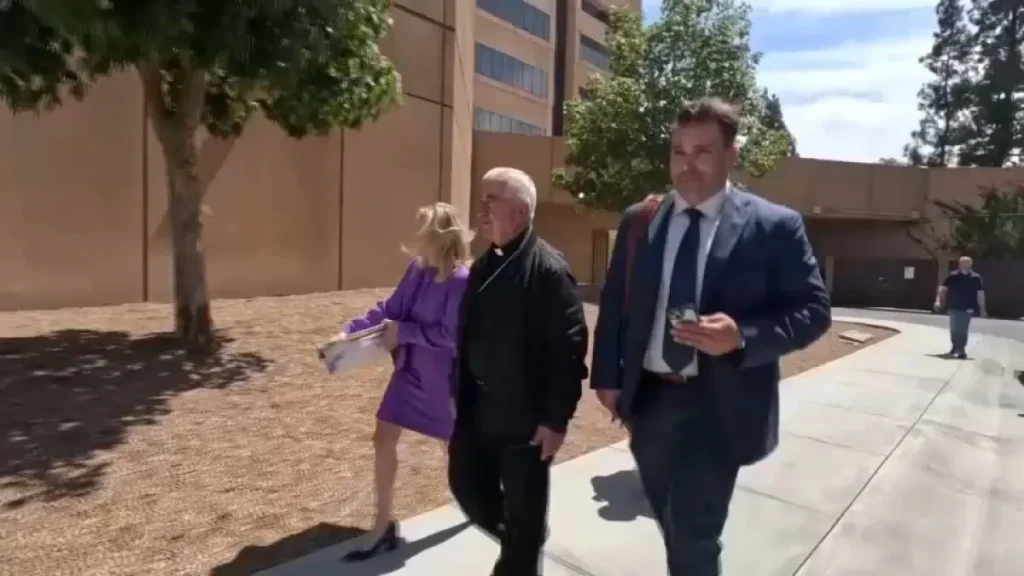
In a courtroom in El Cajon, a preliminary hearing has begun for the former Chaldean Catholic bishop, Emmanuel Shaleta, who faces serious allegations of embezzling church funds. This case has drawn public attention, particularly from members of St. Peter’s Catholic Church, who have spoken out about the bishop’s alleged misconduct.
Bishop Shaleta, 69, is accused of diverting approximately $272,000 from the church through a scheme involving cash payments for rent from a tenant of the church’s social hall. This practice deviated from the church’s standard procedures, which typically involved depositing such payments via check into a designated bank account for church operations.
The accused, who is currently out of custody and has resigned from his position, appeared in court for a hearing to determine if he will face trial on 16 charges of embezzlement and money laundering. The hearing is expected to conclude on Friday.
Rayadh Gaboola, a faithful parishioner and operator of the banquet hall at St. Peter’s Chaldean Church, was the first witness to testify against Bishop Shaleta. Gaboola, who hosts various events at the church complex, recounted his experience of transitioning from paying rent by check to paying in cash, as instructed by the bishop. In March, the diocese office manager informed him that Bishop Shaleta preferred cash payments, which Gaboola agreed to for convenience.
Christine Dawisha, Shaleta’s secretary, testified that she was instructed by the bishop to direct the church social hall’s tenant to pay rent in cash. When questioned about the reason, Shaleta reportedly stated that the cash was needed to assist the needy in Iraq. Dawisha confirmed that she handed over these cash payments to Shaleta as directed.
Typically, rent payments were deposited into the church’s “renovation account.” However, Shaleta allegedly wrote checks from a separate account intended for charitable purposes, depositing the equivalent amounts into the renovation account as reimbursements. This practice was contrary to the church’s policy, which requires two church leaders to sign off on such transactions.
The case highlights the importance of accountability and transparency within religious institutions, aligning with the biblical principle of justice and care for the vulnerable, as reflected in Micah 6:8. As the legal proceedings continue, the community seeks truth and justice, emphasizing the need for integrity and responsibility in leadership roles.
Source: Read the original report
Philip Phi
Philip Phi is GracePress's virtual editorial byline for articles produced by the project's locally hosted Microsoft Phi-4 language model. He does not independently report, interview sources, or witness events. Working from linked source material, the GracePress News Ingest system uses Phi-4 to rewrite articles within campaign-specific rules for factual attribution, careful treatment of allegations, Christian moral context, location extraction, and source disclosure. Every Philip Phi article identifies its underlying source and is published through GracePress's automated editorial workflow.