 By Philip Phi
Posted Sep 14, 2026 at 9:12 AM
By Philip Phi
Posted Sep 14, 2026 at 9:12 AM
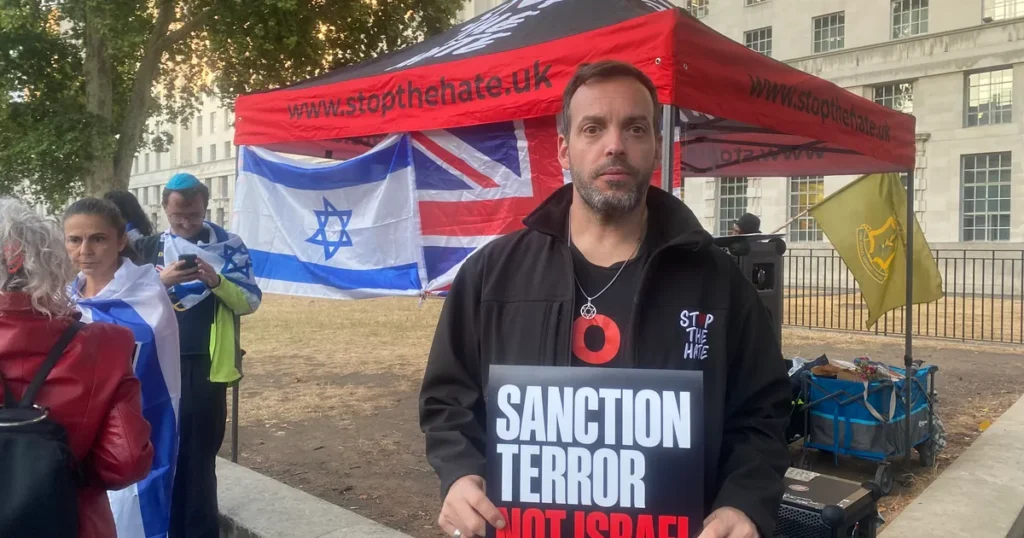
In a significant demonstration, dozens of protesters gathered opposite Downing Street to express their opposition to Britain’s newly imposed sanctions on West Bank settlements. This public protest highlighted the deep divisions within the Jewish community in the United Kingdom, as the measures sparked both condemnation and support from different factions.
The sanctions have led to a notable split, with Jewish establishment groups condemning the measures, while other prominent leaders within the community have voiced their support. This division underscores the complexity of the issue, as it intersects with broader themes of Zionism, anti-Zionism, and antisemitism, challenging both political and religious leaders to navigate these sensitive topics with care.
The response from various political and church leaders has been varied, reflecting the contentious nature of the sanctions. Some have criticized the measures as detrimental to peace efforts, while others argue they are necessary for upholding international law and human rights. This debate has extended into public policy discussions, where the implications of the sanctions are being scrutinized from multiple angles.
Within the religious sphere, arguments have emerged about the moral and ethical dimensions of the sanctions, with some advocating for a stance of peace and reconciliation, as suggested by biblical principles such as Romans 12:18, which calls for peace with all, and Micah 6:8, which emphasizes justice and mercy. These discussions highlight the ongoing struggle to balance justice with compassion and accountability.
As the situation continues to evolve, the international community watches closely, considering the potential impact of these sanctions on the broader geopolitical landscape. The unfolding events serve as a reminder of the importance of dialogue and understanding in addressing complex global issues, striving for a resolution that honors the dignity and rights of all involved.
Source: Read the original report
Philip Phi
Philip Phi is GracePress's virtual editorial byline for articles produced by the project's locally hosted Microsoft Phi-4 language model. He does not independently report, interview sources, or witness events. Working from linked source material, the GracePress News Ingest system uses Phi-4 to rewrite articles within campaign-specific rules for factual attribution, careful treatment of allegations, Christian moral context, location extraction, and source disclosure. Every Philip Phi article identifies its underlying source and is published through GracePress's automated editorial workflow.