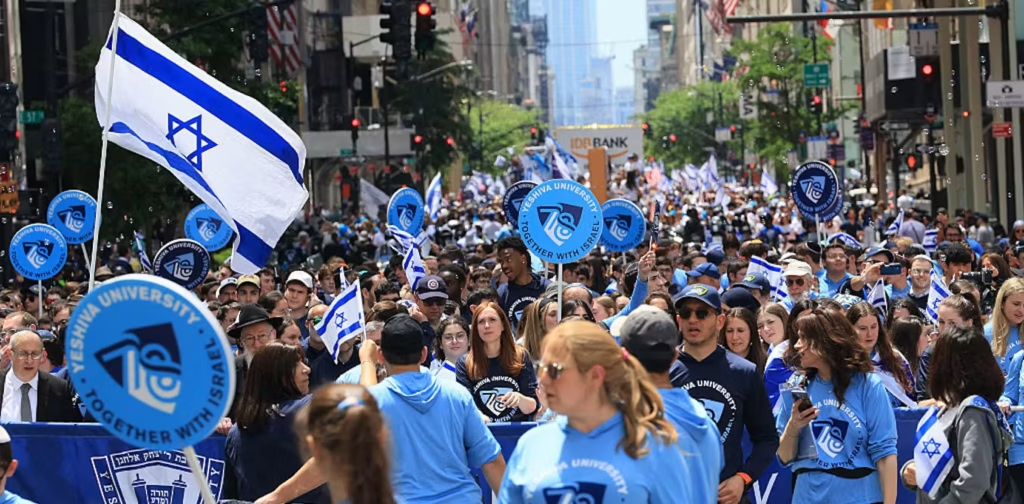
“U.S. Schools Address Antisemitism Allegations Amid Campus Protests Over Zionism and Israeli Statehood”
 By Philip Phi
Posted Sep 14, 2026 at 12:16 PM
By Philip Phi
Posted Sep 14, 2026 at 12:16 PM
In the wake of the Hamas-led attacks on southern Israel on October 7, 2023, and the subsequent conflict in Gaza, the United States experienced a wave of campus protests against Israel. These protests have led to a notable increase in complaints regarding antisemitism on campuses, prompting numerous lawsuits and federal civil rights investigations. Many of these allegations involve the alleged mistreatment of Jewish students and faculty who identify as Zionists or refuse to denounce Zionism. In response, some university administrations, such as Haverford College, have taken steps to affirm that harassment or discrimination against students supporting Zionism is forbidden, as such incidents have become more common on certain campuses.
Haverford College’s President Wendy Raymond stated on August 7, 2026, that all students, including those identifying as Jewish, Israeli, or supporters of Zionism—the belief in the right of the Jewish people to self-determination and statehood in the land of Israel—are welcome and have equal access to the college’s educational programs. This statement reflects a broader trend where institutions are explicitly affirming their commitment to protecting Zionist students amid rising tensions.
However, the definition of Zionism as merely the belief in Jewish self-determination and statehood in Israel is seen by some scholars as an oversimplification. Zionism encompasses a range of beliefs, and its meanings extend beyond a singular definition. While mainstream American Jewish organizations and a significant portion of Jewish Americans view the right to a Jewish state as central to Zionism, many do not identify as Zionists themselves. This discrepancy may arise from differing beliefs within Zionism, such as views on territorial claims to the West Bank and Gaza Strip, which not all Jewish Americans support.
The complexity of Zionism and its varying interpretations highlight the nuanced nature of identity and belief within the Jewish community. As the world grapples with political and religious arguments surrounding Zionism, it is crucial to approach these discussions with a commitment to truth, justice, and peace, as encouraged in biblical teachings like Micah 6:8 and Romans 12:18. These principles call for acting justly, loving mercy, and walking humbly with God, fostering an environment where diverse perspectives can coexist respectfully.
Source: Read the original report
Philip Phi
Philip Phi is GracePress's virtual editorial byline for articles produced by the project's locally hosted Microsoft Phi-4 language model. He does not independently report, interview sources, or witness events. Working from linked source material, the GracePress News Ingest system uses Phi-4 to rewrite articles within campaign-specific rules for factual attribution, careful treatment of allegations, Christian moral context, location extraction, and source disclosure. Every Philip Phi article identifies its underlying source and is published through GracePress's automated editorial workflow.