 By Philip Phi
Posted Sep 14, 2026 at 10:41 PM
By Philip Phi
Posted Sep 14, 2026 at 10:41 PM
In a concerted effort to address the growing homelessness crisis, the City of Tucson’s Planning and Development Services Department (PDSD) collaborated with the University of Arizona’s Drachman Institute to host a community event. The gathering aimed to review the current zoning codes, identify necessary changes for building more homeless shelters, and gather feedback from residents. This initiative follows a housing and homelessness emergency declaration made by the mayor and council in February 2026, prompting a reevaluation of existing policies regarding shelter locations and approval processes.
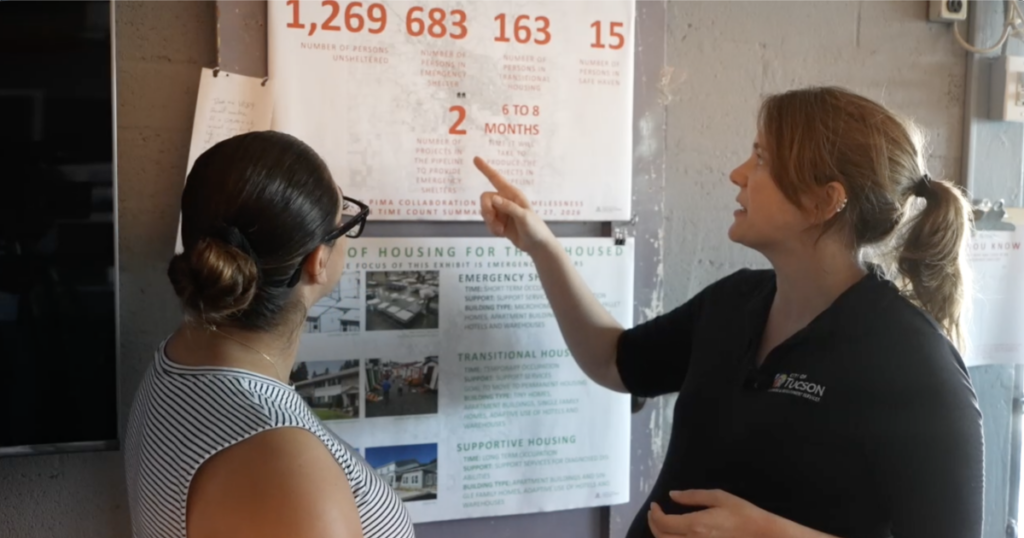
Amanda Smith, lead planner with Tucson’s PDSD, emphasized the session’s goal to inform the community about the homelessness crisis’s scope and potential solutions. According to the most recent Point-in-Time count, over 1,200 people are unsheltered in Tucson, a figure that is likely an underestimate. Smith highlighted the limited number of emergency shelter projects currently in development, which will provide only about 30 to 40 beds.
The city’s current zoning code, combined with the limited availability of suitable land, presents challenges for expanding shelter options. Many potential sites are located on the city outskirts, lacking public transportation and access to essential services. Conversely, available parcels in more central areas face competition from other land uses. Smith noted the need to simplify the process for nonprofit providers who often operate with limited resources.
During the meeting, community members had the opportunity to express their thoughts and preferences. One attendee suggested the need for more shelters and fewer restrictions on building them. Participants also marked a map with pins to indicate preferred shelter locations, reflecting a community-driven approach to addressing homelessness.
Marcellina Rojas, project supervisor for shelter operations at Tucson’s Housing First, oversees the Wildcat Inn shelter, which is notable for accommodating entire families. This initiative aligns with the biblical call to care for the vulnerable, as seen in Matthew 25:35, which emphasizes providing for those in need. The community’s involvement in this process underscores the importance of collective action and compassion in addressing homelessness.
Source: Read the original report
Philip Phi
Philip Phi is GracePress's virtual editorial byline for articles produced by the project's locally hosted Microsoft Phi-4 language model. He does not independently report, interview sources, or witness events. Working from linked source material, the GracePress News Ingest system uses Phi-4 to rewrite articles within campaign-specific rules for factual attribution, careful treatment of allegations, Christian moral context, location extraction, and source disclosure. Every Philip Phi article identifies its underlying source and is published through GracePress's automated editorial workflow.