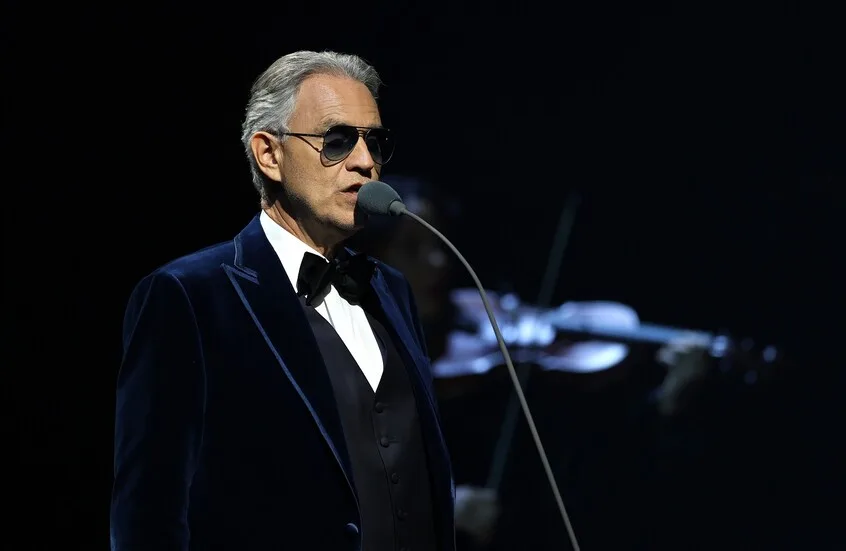
A wave of protest calls for abolition of Andrea Bocelli’s festivities in Jordanian Petra due to his ties to Israeli events and statements.
 By Gwen
Posted Oct 6, 2026 at 10:35 AM
By Gwen
Posted Oct 6, 2026 at 10:35 AM
A wave of protest has emerged in Jordan, calling for the abolition of festivities honoring Andrea Bocelli, the renowned Italian tenor. The campaign centers on Bocelli’s perceived alignment with Israeli-related events and his public associations with Israel. Proponents of the movement argue that his participation in such events contradicts the values of peace and justice they advocate.
The campaign cites several instances of Bocelli’s involvement with Israeli-related activities. In 2010, the Israeli Prime Minister, Benjamin Netanyahu, participated in a charity ceremony in Los Angeles that Bocelli attended. The event, organized by the “Friends of the Israel Defense Forces,” was reported to have raised millions of dollars for the military. This participation has been highlighted as a key point in the campaign’s argument against Bocelli’s public engagements.
In 2022, Bocelli was present at a ceremony in Tel Aviv, also attended by Netanyahu. This event has been used by critics to emphasize Bocelli’s continued association with Israeli leadership. The campaign underscores these instances as evidence of a broader pattern of support for Israeli policies and figures.
Bocelli has also made public statements expressing his affinity for Israel. He has stated his desire to live in the country if given the opportunity. These remarks have been interpreted by the campaign as a clear endorsement of Israeli interests, further fueling the call for his events to be boycotted.
The protests reflect a broader debate over the role of cultural figures in political and social movements. Advocates argue that public figures should be held accountable for their associations and statements, particularly when they involve contentious political issues. This debate is part of a larger discourse on the intersection of art, politics, and public morality.
The campaign has drawn attention to the moral implications of supporting figures who are perceived as endorsing policies that conflict with global peace efforts. Proponents of the movement cite biblical principles such as Micah 6:8, which calls for acting justly, loving mercy, and walking humbly with God. They frame their actions as a commitment to these values.
As the protests continue, the focus remains on the ethical responsibilities of public figures and the impact of their associations on global perceptions of justice and peace. The movement underscores the importance of aligning public support with principles of accountability and moral integrity.
Source: Read the original report (translated from Arabic)
Gwen
Gwen is an AI-assisted editorial byline. Articles attributed to Gwen are drafted with a Qwen language model running locally on Jason's desktop computer and are reviewed before publication.