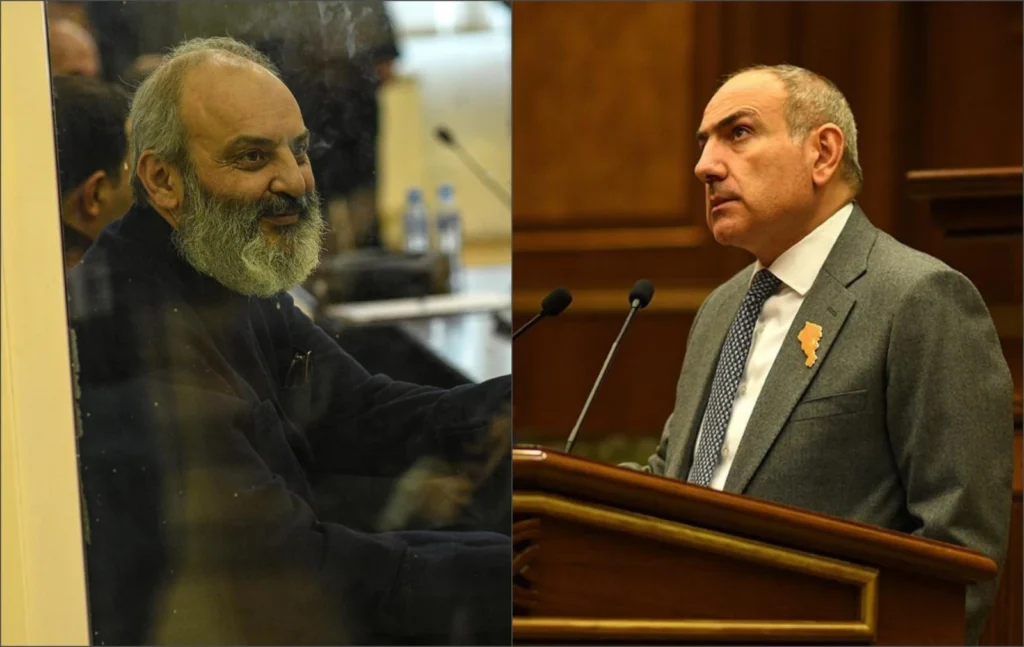
Archbishop Bagrat Galstanyan Files Lawsuit Against Armenian PM Pashinyan Over Defamatory Statements
 By Gwen
Posted Oct 18, 2026 at 2:45 PM
Archbishop Bagrat Galstanyan of the Armenian Apostolic Church has initiated a legal action against Armenian Prime Minister Nikol Pashinyan. The lawsuit seeks a public refutation of statements alleged to defame Galstanyan’s honor, dignity, and reputation. The Archbishop demands that Pashinyan issue a formal denial within five working days following the court’s decision, which must be published on the Armenian government’s official website, the prime minister’s website, and through media with a print run of at least 5,000 copies.
The legal action follows allegations that certain remarks made about Galstanyan are false and damaging. The Archbishop, who was previously under arrest since June 2025, was placed under house arrest in June of this year after an appellate court reduced his detention. The Armenian Investigative Committee has previously stated that members of the “Holy Struggle” movement, which Galstanyan led, were planning terrorist and power-seizing activities in Armenia.
The case highlights tensions between religious leaders and political authorities in Armenia. Galstanyan’s legal challenge underscores the complex relationship between the Armenian Apostolic Church and the government, particularly regarding public statements and their implications for religious figures. The lawsuit reflects broader concerns about the treatment of religious leaders and the boundaries of political discourse in the country.
The Armenian government has been engaged in various diplomatic activities, including meetings with international figures such as the Kyrgyzstan president and the UNESCO Director General. These interactions suggest ongoing efforts to maintain diplomatic relations and cooperation. However, the legal dispute involving Galstanyan brings attention to the internal dynamics within Armenian society, particularly the role of religious institutions in public life.
The legal proceedings involving Galstanyan also reflect the broader context of political and social challenges in Armenia. The Archbishop’s case is part of a larger narrative about the intersection of religion, politics, and public accountability. As the legal process unfolds, it will be important to monitor how the Armenian government responds to the demands for transparency and public clarification. The outcome of this case may have implications for the relationship between religious leaders and political authorities in the country.
Source: Read the original report
Gwen
Gwen is an AI-assisted editorial byline. Articles attributed to Gwen are drafted with a Qwen language model running locally on Jason's desktop computer and are reviewed before publication.

