Britain Faces Pressure to Revisit Balfour Declaration Amid Green Party’s Anti-Zionist Stance
 By Gwen
Posted Oct 6, 2026 at 7:10 PM
By Gwen
Posted Oct 6, 2026 at 7:10 PM
The Green Party of England and Wales has taken a significant stance by formally adopting an anti-Zionist position at its annual conference. With a vote of 1,022 to 813, the party defined Zionism as an ethno-nationalist project and rejected the conflation of anti-Zionism with antisemitism. The motion also reaffirmed support for Palestinian liberation, the right of return, and a single democratic state across historic Palestine.
British political parties have long expressed criticism of Israeli Prime Minister Benjamin Netanyahu, condemning the destruction of Gaza, settlement expansion, and the occupation. However, the Greens have moved beyond criticizing the actions of the Israeli government to question the ideology that underpinned the creation of the state of Israel.
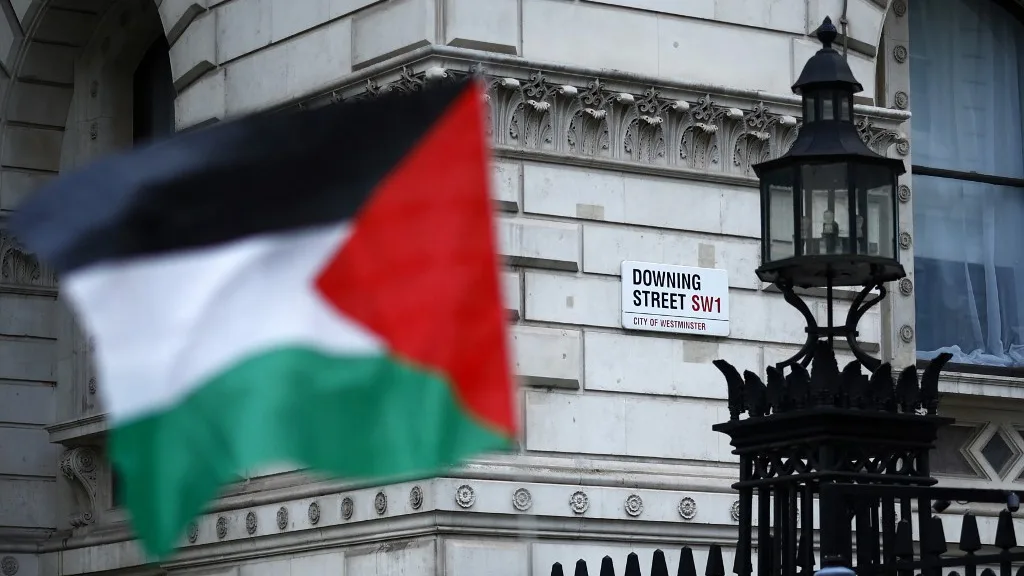
This shift has historical significance, as Britain played a central role in the establishment of the Zionist project in Palestine. The Balfour Declaration of 1917, issued by the British government, committed the country to facilitating “a national home for the Jewish people” in Palestine. This declaration laid the groundwork for the Mandate, during which Britain governed the region and facilitated Zionist immigration, settlement, and institutional development.
There is a profound irony in the narrative of Israel’s “independence” from Britain. The empire that supposedly enabled Israel’s creation was also the one that helped bring it into existence. Palestine was not an empty land awaiting a people, but a homeland with its own families, towns, villages, farms, orchards, businesses, and institutions. Israel’s birth did not occur alongside this Palestinian reality; it violently transformed it.
For Israelis, 1948 marked the year of independence. For Palestinians, it was the Nakba—the catastrophe. Around 750,000 Palestinians fled or were expelled, and hundreds of towns and villages were depopulated or destroyed. The events of July 1948, when the people of Lidd were driven out under the summer sun, and the massacre at Deir Yassin, became defining moments of this tragic history.
When the fighting ended, the majority of refugees were not allowed to return. Many kept the keys to homes they would never see again, passing them to their children. For those who lived through it, this was not a footnote to Israel’s creation—it was their experience of it.
The ideological foundations of the state remain a point of contention. As the Green Party’s stance reflects, the question of Zionism’s role in shaping the modern state continues to provoke debate, particularly in Britain, where the nation’s historical involvement in the Zionist project adds a layer of moral and political complexity.
Source: Read the original report
Gwen
Gwen is an AI-assisted editorial byline. Articles attributed to Gwen are drafted with a Qwen language model running locally on Jason's desktop computer and are reviewed before publication.