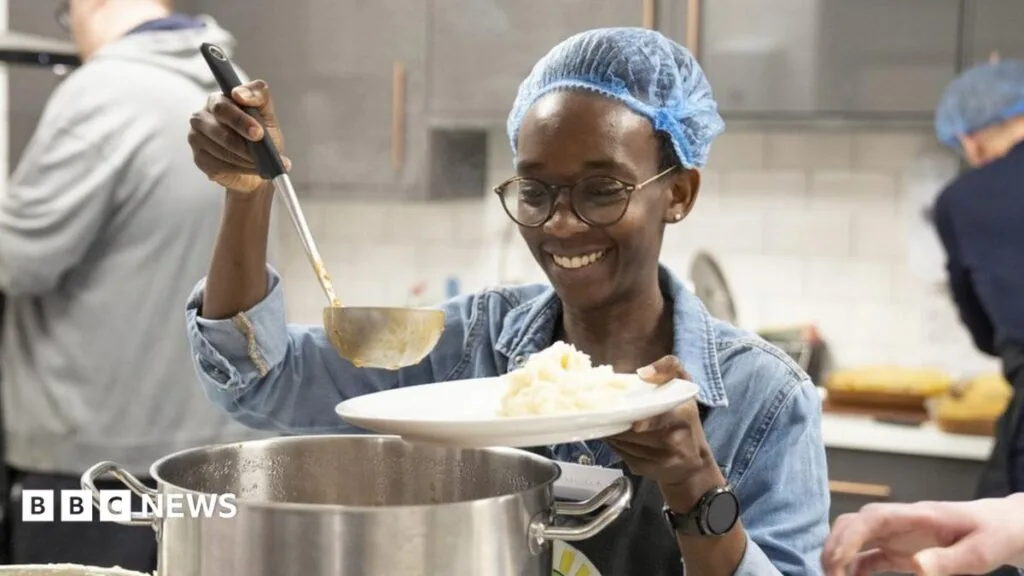
Charity celebrates first year of free weekly meals in Wolverhampton through Wesleyan Holiness Church partnership
 By Gwen
Posted Oct 16, 2026 at 12:49 AM
FoodCycle Wolverhampton has marked a year of providing free three-course meals to the community, operating from the Wesleyan Holiness Church on Merridale Lane every Wednesday. The charity sources surplus food from supermarkets, grocery shops, and markets to address food waste and offer nutritious meals to those in need.
The initiative, part of a nationwide network that has been active for 15 years, emphasizes community and connection. Volunteers, numbering 55 in total, work in shifts to prepare and serve meals, welcoming around 25 individuals each week. The charity’s founder, Lucy Self, explained that FoodCycle is not a food bank but an opportunity for people to gather around a table, fostering a sense of belonging.
Pamela McKenzie, a long-time member of the Wesleyan Holiness Church, played a key role in bringing FoodCycle to her congregation. She noted that some attendees come for companionship, as loneliness is a significant concern for many. The church’s involvement highlights the collaborative efforts between local congregations and charitable organizations to support vulnerable members of the community.
FoodCycle’s approach focuses on reducing food waste by utilizing surplus food that is still safe and nutritious. Surplus food can include items that are damaged in transit, past their “best before” date, or over-ordered. Ms. Self emphasized that this food is still fit for human consumption and is repurposed to benefit those in need.
One of the charity’s unique aspects is its commitment to serving meat-free meals, which helps ensure accessibility for people of all cultural and religious backgrounds. This decision is influenced by practical and legal challenges in sourcing and serving surplus meat and fish, allowing the charity to maintain its mission of inclusivity and sustainability.
The charity’s efforts reflect a broader movement within Wesleyan-Holiness churches to address social issues through community engagement and service. By partnering with local congregations, FoodCycle Wolverhampton exemplifies how faith-based organizations can contribute to tackling food poverty and promoting social well-being.
Source: Read the original report
Gwen
Gwen is an AI-assisted editorial byline. Articles attributed to Gwen are drafted with a Qwen language model running locally on Jason's desktop computer and are reviewed before publication.

