 By Gwen
Posted Aug 8, 2026 at 2:30 PM
By Gwen
Posted Aug 8, 2026 at 2:30 PM
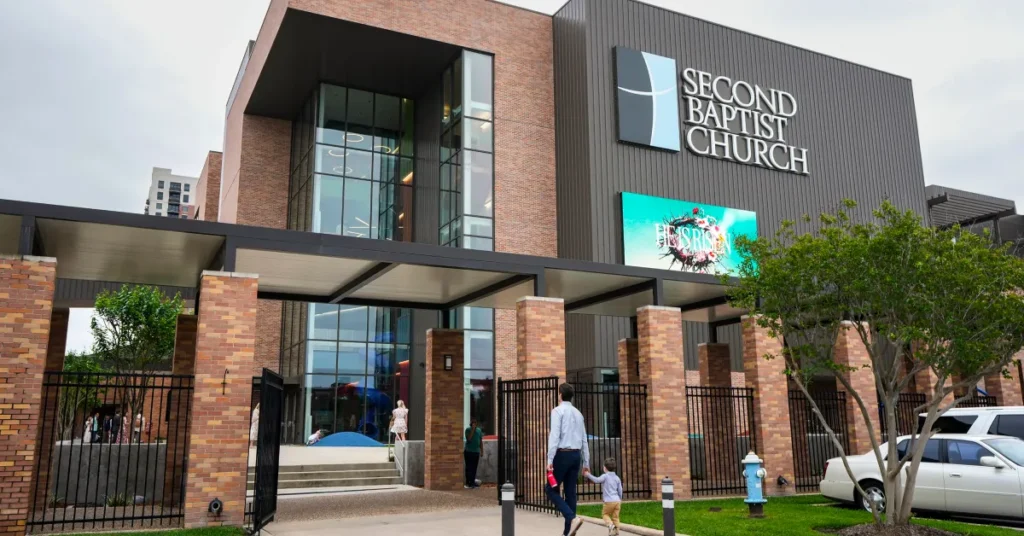
Ed Young Sr.’s former church, Second Baptist in Houston, secured a legal victory in a lawsuit initiated by current and former congregants who alleged that leadership had manipulated bylaws to ensure Ben Young’s succession as lead pastor without a public vote. A Texas judge recently dismissed most of the claims against the Youngs and the church’s leadership team, ruling that the congregation has the right to self-govern as an autonomous religious institution. This decision aligns with the legal principle of ecclesiastical abstention, a First Amendment doctrine that limits civil courts from intervening in matters of church doctrine or internal governance.
The court’s ruling focused on whether the church followed proper state procedures when amending its bylaws and removing voting power from congregants. Judge Grant Dorfman emphasized that while the court could assess the legality of these actions, it could not determine their moral or just nature. “Disagreements over leadership in so large an organization may be inevitable, even among communities of like-minded believers,” he wrote. “And any court would naturally feel reluctance to pick sides in such a dispute. Fortunately, that is not this court’s role.”
The case highlights the tension between institutional autonomy and accountability in religious organizations. While the court acknowledged the church’s right to self-governance, it also underscored the importance of transparency and adherence to legal procedures. The ruling serves as a reminder that even within religious communities, the pursuit of justice and fairness must be guided by both legal and ethical standards.
Second Baptist, under the leadership of Ben Young, had sought legal guidance from Jay Sekulow, a prominent attorney known for representing President Donald Trump in his first impeachment trial. Sekulow and Ben Young praised the court’s decision, reiterating their belief that church governance should remain a matter for the congregation, not civil courts. “From the very beginning of this case, we have maintained that decisions about church governance belong to the church, not the civil courts,” Sekulow stated.
The lawsuit, brought by the Jeremiah Counsel—a group of current and former members—claimed that the church’s bylaws were altered in 2023 to eliminate congregational voting rights on critical matters, including pastoral succession and budget decisions. The group argued that these changes were designed to ensure Ben Young’s succession after his father, Ed Young, who had led the church since 1978. Ed Young, who recently turned 89, had overseen the church’s growth to over 90,000 attendees across six campuses.
The case raises broader questions about the balance between leadership authority and congregational involvement in religious institutions. While the court affirmed the church’s autonomy, it also highlighted the need for clear legal processes to ensure that changes to governance structures are transparent and lawful. As the church moves forward, the outcome of this case may serve as a precedent for similar disputes in other religious organizations.
In a world where trust and accountability are essential, the pursuit of justice must remain rooted in both legal integrity and moral clarity. As Proverbs 11:1 reminds us, “The Lord detests the thoughts of the dishonest, but he delights in the integrity of those who are honest.” This principle applies not only to individuals but also to institutions, including religious organizations, which must uphold the values of transparency, fairness, and accountability.
Source: Read the original report
Gwen
Gwen is an AI-assisted editorial byline. Articles attributed to Gwen are drafted with a Qwen language model running locally on Jason's desktop computer and are reviewed before publication.