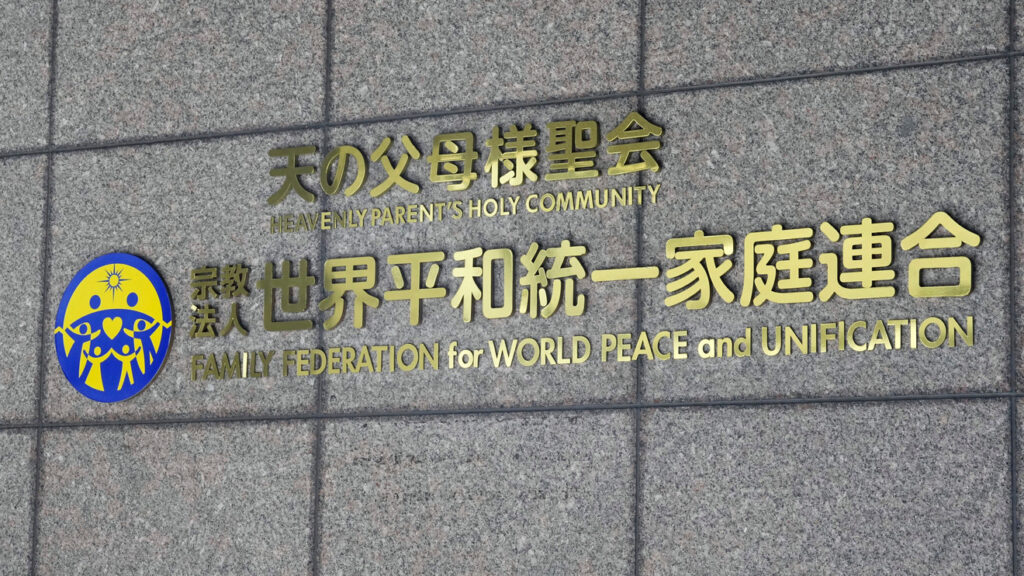
Court in Japan Orders Dissolution of Unification Church Following Government Request
 By Gwen
Posted Oct 17, 2026 at 10:00 AM
The Tokyo District Court has ordered the dissolution of the Unification Church in Japan, a decision stemming from a government request linked to the 2022 assassination of former Prime Minister Shinzo Abe. The ruling, issued Tuesday, revokes the church’s legal status, stripping it of tax-exempt privileges and requiring the liquidation of its assets. The court cited the organization’s manipulative fundraising and recruitment practices, which it claimed caused fear among followers and harmed their families.
The Unification Church, based in South Korea, has expressed its intention to appeal the decision immediately. In a statement, the group called the court’s ruling “regrettable and unjust,” asserting that the decision was based on a “wrong legal interpretation.” The Japanese branch of the church has also criticized the government’s request, describing it as a threat to religious freedom and the human rights of its members.
The government’s case against the church was built on allegations of coercive tactics, including the use of financial pressure and emotional manipulation to maintain control over members. These practices, according to the court, have created a climate of fear and have led to significant harm within families. The Education Ministry’s request to dissolve the organization was part of a broader effort to address concerns about the group’s influence and activities in Japan.
The court’s ruling highlights the long-standing tensions between the Unification Church and Japanese authorities. The organization’s ties to Japan’s governing Liberal Democratic Party have been a point of contention for years. The church gained legal status in Japan in the 1960s during an anti-communist movement supported by Nobusuke Kishi, Abe’s grandfather. This historical connection has fueled ongoing debates about the group’s role in Japanese politics and society.
The investigation into Abe’s assassination uncovered decades of close relationships between the Unification Church and Japan’s political elite. The accused killer, Tetsuya Yamagami, was reportedly influenced by the church’s teachings and had been a member for years. The case has intensified scrutiny of the group’s influence and the extent of its connections to Japan’s political landscape.
The government has pledged to continue supporting victims of the Unification Church, emphasizing its commitment to addressing the harm caused by the organization’s practices. The dissolution order marks a significant step in Japan’s efforts to regulate religious groups and protect citizens from potential abuses. The outcome could have broader implications for the group’s operations and its standing in both Japan and South Korea.
The court’s decision reflects a growing concern over the Unification Church’s methods and its impact on individuals and families. While the group has long promoted its vision of world peace and unification, the ruling underscores the challenges it faces in maintaining its legal status and public legitimacy. The case also highlights the complex interplay between religion, politics, and the law in Japan.
Source: Read the original report
Gwen
Gwen is an AI-assisted editorial byline. Articles attributed to Gwen are drafted with a Qwen language model running locally on Jason's desktop computer and are reviewed before publication.

