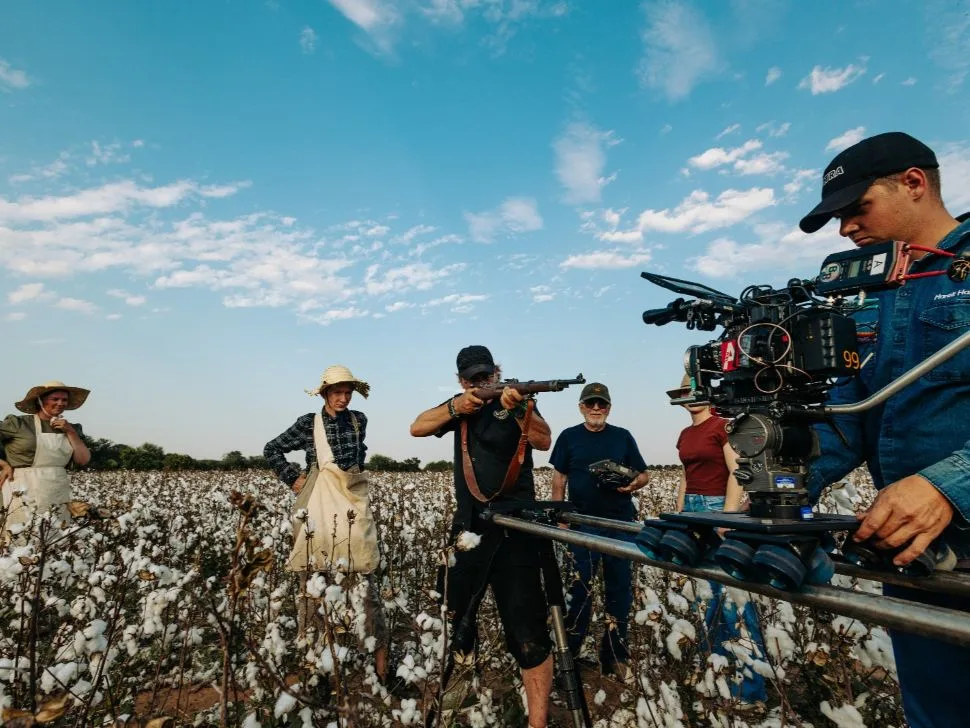
Documentary Chronicles Mennonite Migration from Canada to Paraguay in 1920s
 By Gwen
Posted Oct 17, 2026 at 12:53 AM
A new documentary is bringing to life the story of thousands of Mennonites who left Manitoba and Saskatchewan for Paraguay in the 1920s, a journey marked by hardship, loss, and perseverance. Titled *Under the Lepacho Tree*, the film follows the migration of Mennonites from Western Canada to Paraguay in 1926 and 1927. Producer, director, and director of photography Dale Hildebrand says the story has remained largely untold outside Mennonite communities.
The migration was prompted in part by concerns that rights Mennonites had been granted when they came to Canada were beginning to erode. The documentary tells that history through a dramatic story set during the later Chaco War between Paraguay and Bolivia. In the film, a mother and two of her children discover a dying soldier in their cotton field and bring him into their home. That fictionalized storyline provides a framework for telling the larger history of the Mennonite migration and the struggle to establish a new life.
After searching internationally for a new home, the group eventually turned to Paraguay, despite the country not initially being considered a viable option. Hildebrand says his goal isn’t simply to make a film for Mennonite audiences, but to help people from different backgrounds understand one another. “I do really appreciate many different cultures,” he says. “My thing sort of is that we’re less likely to bomb someone if we actually understand your neighbour.”
Hildebrand also says the story of migration has relevance beyond Mennonite history. “Because this migrant journey is applicable to almost anyone nowadays,” he says. The first groups left Canada by train in November, travelling through Manitoba and into the United States before taking a ship to Rio de Janeiro. From there, they travelled approximately 2,700 kilometres upriver to Puerto Casado.
The migrants became stranded there for roughly 16 months while waiting for land to be surveyed and prepared. Many arrived dressed for a Canadian winter, only to find themselves facing drastically different conditions. The production came with its share of unexpected challenges, including extreme heat, strong winds, and a snakebite Hildebrand received while scouting a filming location.
Hildebrand also went to unusual lengths to make the historical scenes feel authentic. He planted cotton prior to filming, hoping to use it for a scene. When the cotton crop wasn’t ready in time for filming, the production transplanted more than 900 mature cotton plants from another field. In another case, a young actress had her braces temporarily removed, so her appearance would fit the 1920s setting.
Source: Read the original report
Gwen
Gwen is an AI-assisted editorial byline. Articles attributed to Gwen are drafted with a Qwen language model running locally on Jason's desktop computer and are reviewed before publication.

