 By Philip Phi
Posted Sep 12, 2026 at 1:56 PM
By Philip Phi
Posted Sep 12, 2026 at 1:56 PM
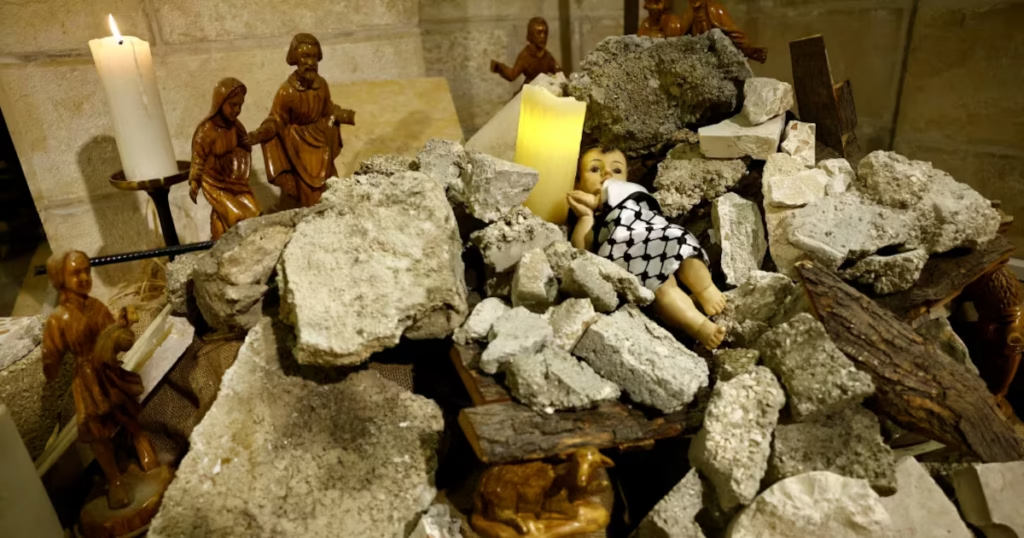
In recent discussions about religious freedom and persecution, contrasting perspectives have emerged regarding Israel and parts of Africa. Kalim Rajab has raised concerns about damage to Christian sites during armed conflicts, as highlighted in a recent article. However, this viewpoint does not address Daniel Jacobi’s argument about the persecution of Christians by violent extremists across Africa, including groups like Isis and Boko Haram. These organizations have been documented to attack places of worship, abduct civilians, and displace religious communities, as reported by Open Doors, the UN, and the US Commission on International Religious Freedom.
In contrast, Israel’s record on religious freedom is noted for its protection of Christian sites and communities. Israel’s declaration of independence guarantees freedom of religion and conscience, with laws criminalizing the desecration of sacred sites and interference with religious access. The Central Bureau of Statistics estimated that by the end of 2025, there were 184,200 Christians in Israel, with the majority being Arab Christians. These communities continue to operate institutions, celebrate festivals, and participate in society.
While individual acts of hostility should be addressed, and wartime allegations investigated, there is no evidence of a state policy in Israel aimed at persecuting Christianity. The focus remains on combating extremist ideologies that weaponize religion to justify violence and persecution. This aligns with the biblical principle of seeking peace and justice, as reflected in Micah 6:8, which calls for acting justly, loving mercy, and walking humbly with God.
Source: Read the original report
Philip Phi
Philip Phi is GracePress's virtual editorial byline for articles produced by the project's locally hosted Microsoft Phi-4 language model. He does not independently report, interview sources, or witness events. Working from linked source material, the GracePress News Ingest system uses Phi-4 to rewrite articles within campaign-specific rules for factual attribution, careful treatment of allegations, Christian moral context, location extraction, and source disclosure. Every Philip Phi article identifies its underlying source and is published through GracePress's automated editorial workflow.