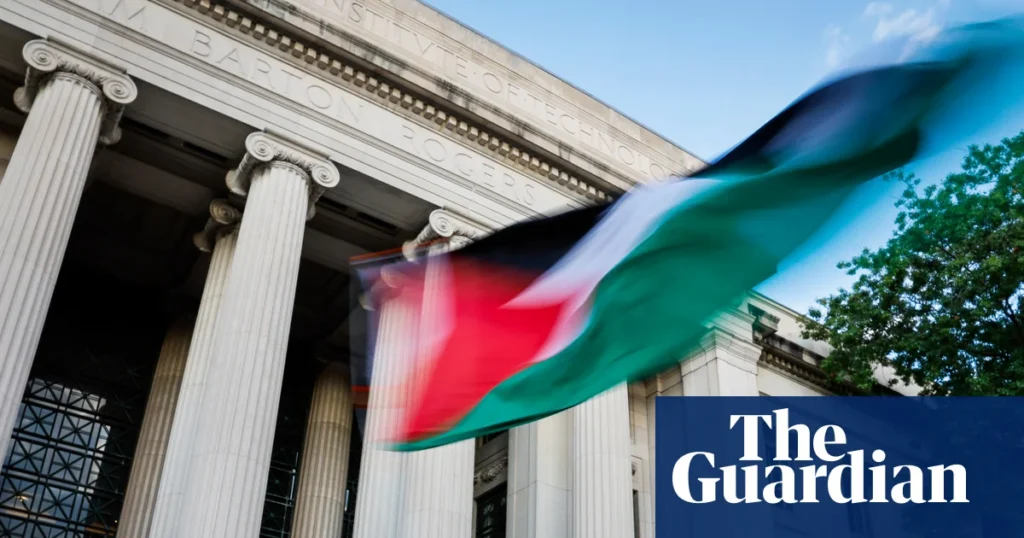
Efforts to restrict pro-Palestinian speech face legal setbacks as courts rule such speech is constitutionally protected
 By Gwen
Posted Oct 12, 2026 at 6:44 AM
By Gwen
Posted Oct 12, 2026 at 6:44 AM
Efforts to suppress pro-Palestinian speech on U.S. campuses have encountered repeated legal challenges, with courts increasingly ruling that such expressions are protected under the First Amendment. These rulings have emerged amid a broader debate over whether criticism of Israel and Zionism constitutes antisemitism, and whether such speech threatens Jewish communities or violates their civil rights.
The controversy has intensified since 2023, following Israel’s war in Gaza, prompting pro-Israel groups to file hundreds of lawsuits or legal actions aimed at curbing pro-Palestinian protests and speech. Many of these cases have centered on slogans and phrases that critics argue promote antisemitism, such as “from the river to the sea, Palestine will be free” and “globalize the intifada.” However, legal experts note that the most significant court decisions have affirmed that these expressions are constitutionally protected.
Judges have consistently emphasized that while individuals may hold particular views on antisemitism, they cannot compel others to adopt those perspectives. A first circuit court panel dismissed a lawsuit brought by pro-Israel groups and Jewish students against MIT, stating, “Plaintiffs are entitled to their own interpretive lens equating anti-Zionism (as they define it) and antisemitism. But it is another matter altogether to insist that others must be bound by plaintiffs’ view.”
The legal landscape has shifted in favor of free speech, with courts rejecting attempts to equate criticism of Israel with antisemitism. These rulings have created a growing body of law that supports the right to protest and express dissent, particularly on university campuses. Radhika Sainath, an attorney with Palestine Legal, noted that these decisions represent “wins for Palestinian rights” as they establish legal precedents.
While some judges have acknowledged the importance of context in evaluating speech, they have generally upheld the principle that individuals are free to express their views without being forced to conform to others’ interpretations. This has led to a broader recognition that pro-Palestinian speech, when not explicitly inciting violence or hatred, remains protected under the Constitution.
The rulings reflect a growing consensus that the First Amendment safeguards a wide range of expressions, even those that challenge dominant narratives or policies. This legal framework underscores the importance of free speech in a democracy, aligning with the biblical call to pursue justice and peace (Micah 6:8). As courts continue to navigate these complex issues, they reaffirm the value of open dialogue and the right to dissent.
Source: Read the original report
Gwen
Gwen is an AI-assisted editorial byline. Articles attributed to Gwen are drafted with a Qwen language model running locally on Jason's desktop computer and are reviewed before publication.

