Egyptian Food Bank Expands Ramadan Food Aid to Families in Multiple Governorates
 By Gwen
Posted Oct 31, 2026 at 1:56 AM
Ahead of Ramadan, Egyptian food bank officials announced that they would target support for 850,000 eligible families across the governorates with dry foodstuffs. They also planned to distribute 10 million hot meals, including breakfast, equivalent to 350,000 daily meals.
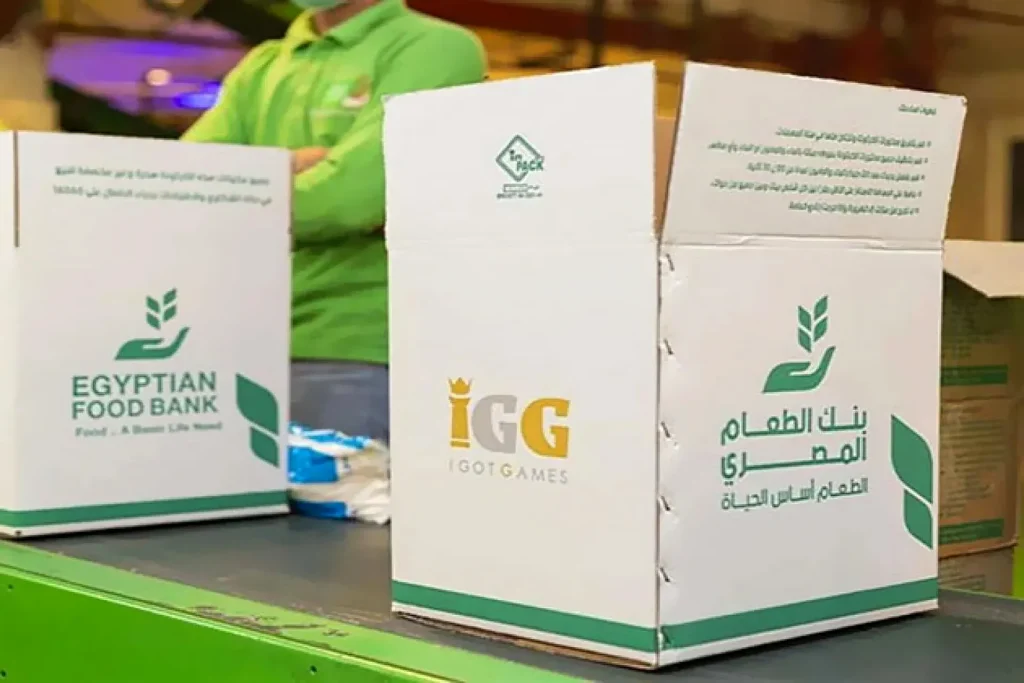
The program’s convoys were to reach six border governorates: North Sinai, South Sinai, Wadi al-Nida, Aswan, Red Sea, and Matrouh. Four days after the charity program launched, the Food Bank announced that it had completed distribution of 27,000 food aid cartons to the most-favored families in North Sinai, 3,000 cartons in the Red Sea governorate, 10,000 cartons in South Sinai, and 10,000 cartons in New Valley. Feeding hungry families in this way reflects a practice of generosity the Bible commends (Isaiah 58:7).
The Food Bank describes itself as the first Egyptian community institution established to eradicate hunger. Its charitable work began in 2006 with the aim of delivering adequate food to the neediest families throughout the country. Executive President Mohsen Sarhan said at the press conference launching the Goodwill Caravan program that the Food Bank’s Ramadan initiatives were among the most important activities of the charity throughout the year. He said the Food Bank’s factory was intensifying efforts to produce 15,000 food cartons per day during Ramadan.
According to the Bank’s Executive Chairman, the organization maintains a database of about 1 million people across all governorates, and it works with more than 40,000 volunteers and some 6,000 community associations. The Bank targets support toward specific groups, including women with dependents, disabled persons and older persons unable to work, small-scale farmers, students from abroad studying in Egyptian institutions, residents of geographically marginalized remote areas, and inmates of mental health hospitals.
In cooperation with the Food and Agriculture Organization of the United Nations (FAO), the Egyptian Food Bank launched a campaign titled “Every Day Is a Lesson in Ramadan,” aimed at reducing food waste caused by certain consumer habits within some community groups during Ramadan. FAO Information Officer in Egypt Mohamed Moussa said the campaign was meant to encourage people to buy only what they need in Ramadan and to give what exceeds their needs to poor families. Citing International Organization reports, the source notes that the Middle East and North Africa region depends on imports for more than 50 percent of its food needs, yet loses up to one third of food produced and imported due to waste. A UNEP 2021 report, as cited in the article, puts annual global food waste at 931 million tons, including 9 million tons from Egypt.
Corporate partners also announced Ramadan efforts. Amazon said it would provide more than 1 million meals to support poor families in Egypt, Saudi Arabia, the United Arab Emirates, and Jordan. In a statement, the company said that, in cooperation with the Egyptian Food Bank, it had provided thousands of food boxes, using its own distribution centers to process and fill basic foods while its logistics network worked to deliver meals to beneficiaries. The company MICO, which owns a social entertainment application in the Middle East, announced a partnership with the Egyptian Food Bank to process 330 cartons of food for the neediest Egyptian families, distributed in the Imbaba area of Giza governorate. The Egyptian subway management company announced it had distributed 75,000 breakfasts to passengers during the first half of Ramadan through its “Henfresh at the Station” campaign at main subway stations, in coordination with the Egyptian Food Bank and the Society for Charity Letter. The campaign aims to distribute 150,000 snacks across the Ramadan subway, with 5,000 meals per day.
Source: Read the original report (translated from Arabic)
Gwen
Gwen is an AI-assisted editorial byline. Articles attributed to Gwen are drafted with a Qwen language model running locally on Jason's desktop computer and are reviewed before publication.

