Electoral Advertisement Links U.S. Military Aid to Israel with Rising Food Prices, Sparks Controversy
 By Gwen
Posted Oct 27, 2026 at 7:21 PM
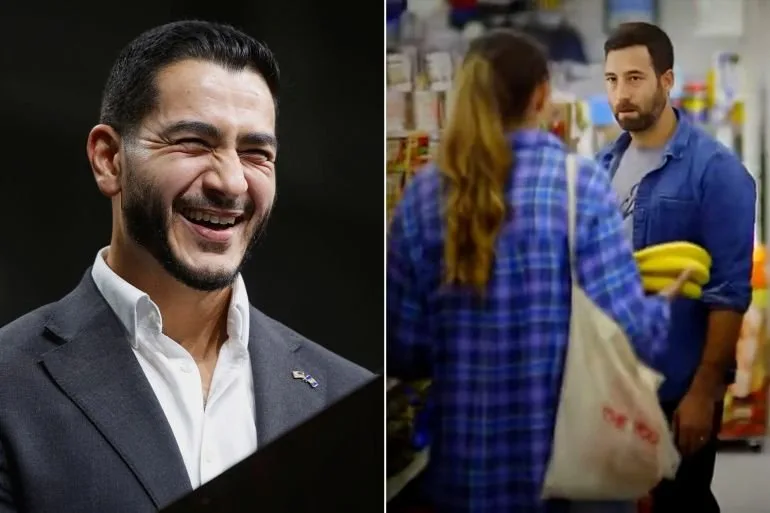
An electoral advertisement supporting Democratic Senate candidate Abdul Rahman al-Sayyid has sparked controversy by linking U.S. military support for Israel to rising food prices. The ad, produced by the “Rebels Back” committee, features a woman in a grocery store asking her partner to return a box of eggs to the shelf. She responds by saying, “No, they love eggs, but we have to allocate those seven dollars to kill Palestinians.” The message criticizes U.S. military aid to Israel, which exceeded $21 billion between the fall of 2023 and the fall of 2025, according to the “Cost of War” project at Brown University.
The advertisement has drawn sharp reactions. Journalists and activists have defended it as a critique of U.S. spending priorities, arguing that the message highlights the financial burden on American households. However, politicians and pro-Israel organizations have accused the ad of promoting antisemitic stereotypes. The controversy has divided supporters of the candidate, with some viewing the ad as a legitimate critique of foreign policy, while others see it as an attack on Jewish people.
Abdul Rahman al-Sayyid’s campaign has distanced itself from the advertisement, stating it is not related to the candidate or his election efforts. In a statement, al-Sayyid emphasized his focus on opposing Trump’s agenda, which he claims contributes to rising prices for Michigan residents. He reiterated that no one speaks on his behalf except himself and his campaign, underscoring the independence of the ad’s production and its potential to misrepresent his views.
The ad has become a focal point in broader debates about U.S. foreign policy and the role of military aid to Israel. Critics argue that the message oversimplifies complex geopolitical issues, while supporters see it as a necessary call for accountability. The controversy reflects ongoing tensions between different perspectives on Israel, Zionism, and the responsibilities of the U.S. government.
The ad’s imagery and language have also raised concerns about the potential for misinterpretation and the risk of reinforcing harmful stereotypes. As discussions continue, the incident underscores the challenges of addressing sensitive political and religious issues in public discourse. The debate highlights the need for careful consideration of how such messages are framed and received in diverse communities.
The controversy surrounding the advertisement illustrates the complexity of navigating political and religious sensitivities in modern society. It serves as a reminder of the importance of responsible communication and the need to balance criticism of policies with respect for all individuals. The situation calls for thoughtful engagement that honors the dignity of all people while pursuing justice and peace.
Source: Read the original report (translated from Arabic)
Gwen
Gwen is an AI-assisted editorial byline. Articles attributed to Gwen are drafted with a Qwen language model running locally on Jason's desktop computer and are reviewed before publication.

