Food Pantry Usage Increases in Door County as Demand Rises
 By Gwen
Posted Oct 23, 2026 at 6:12 PM
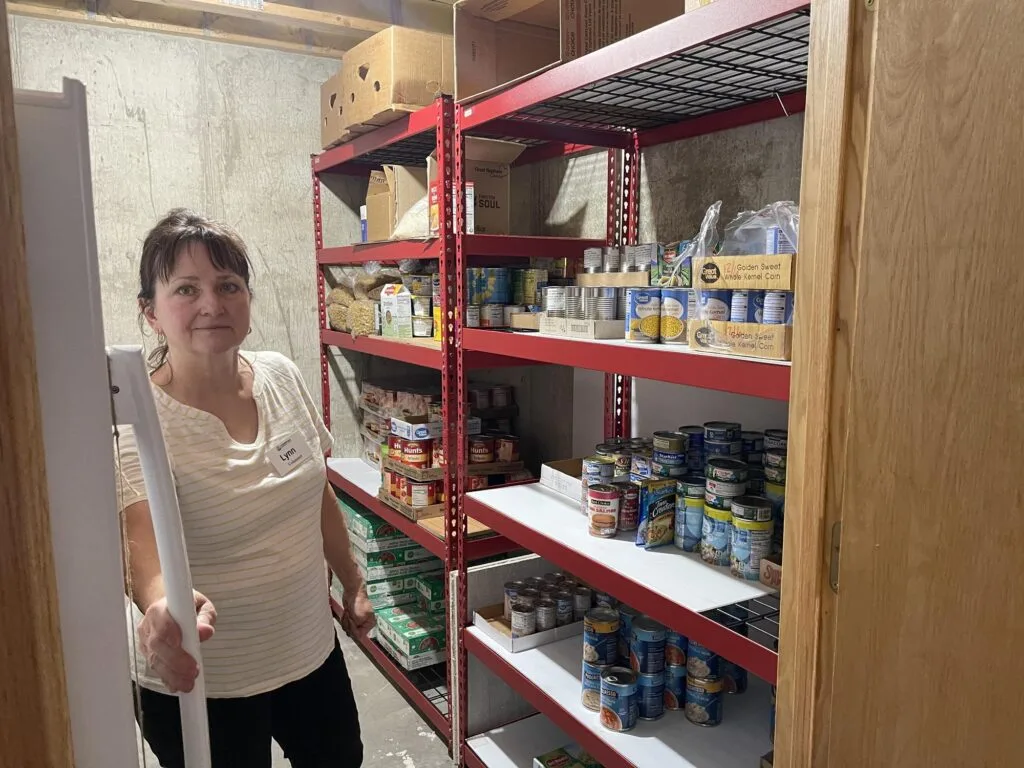
Lynn Marquardt, a volunteer at the Sturgeon Bay Community Church Food Pantry, noted a shift in the types of food arriving from Feeding America. Once a regular source of protein, such as ham, has become rare in recent months. “We used to get protein almost on a weekly basis, but for at least a year now, it’s very rare,” Marquardt said. This change reflects broader challenges in securing nutritious food for those in need.
Feeding America, a national nonprofit food bank network, reported $5.2 billion in public support in 2024, with 92.5% of its $5.3 billion in expenses going toward food. While it provides free weekly shipments—often snacks, noodles, or fruit cups—protein is uncommon. Marquardt explained that much of the food is donated by companies, often near expiration or defective.
The Sturgeon Bay Community Church Food Pantry offers two types of support: a monthly basic-needs bag containing detergent, wipes, and paper goods, and a weekly food bag with breakfast and lunch items for a family of four, plus a produce/dairy coupon for Tadych’s grocery store. No eligibility requirements exist beyond providing a name for Feeding America reporting.
Items like eggs, milk, and bread are included within the food bags, though rising costs have taken a toll. No matter the cost, the pantry provides the staples. The atmosphere as people picked up their food bags was warm, with friendly greetings and small talk. Volunteers know many of the recipients by name. One pantry visitor on this particular Friday was thrilled to get a ham.
Volunteers keep the pantry stocked almost exclusively with donations from the church’s congregation and the wider community. Demand is rising. In April 2025, they served 113 people. A year earlier, they served only 29. The numbers have continued to rise each month since.
They don’t track demographics, but anecdotally, about three-quarters of the new visitors are elderly, Marquardt said. That squares with Laura Apfelbeck’s experience as the University of Wisconsin-Madison Extension FoodWIse program coordinator for Door, Kewaunee, and Manitowoc counties. “In all three counties I serve, the largest group of impoverished people is elderly women, followed by women with young children, followed by other women,” Apfelbeck said. “If you consider income disparities for women versus men in similar work positions, longtime wage gaps, cost of childcare and child rearing, etc., this is not surprising.”
In Sister Bay, a young J-1 student pedaled up to a church and asked quietly if this was the one with food. Inside the Door of Life Food Pantry, she carefully read each label before packing her bag.
Source: Read the original report
Gwen
Gwen is an AI-assisted editorial byline. Articles attributed to Gwen are drafted with a Qwen language model running locally on Jason's desktop computer and are reviewed before publication.

