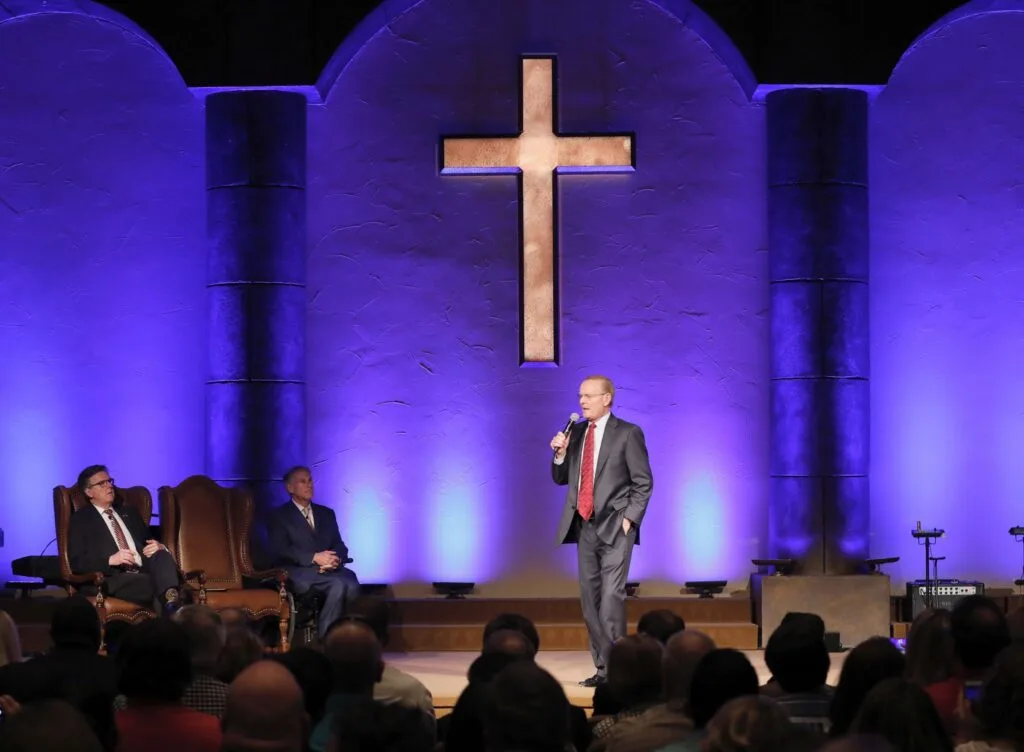
Grace Church megachurch expands conservative political outreach to ‘woke’ regions
 By Gwen
Posted Oct 20, 2026 at 8:10 AM
Grace Church in The Woodlands, led by senior pastor Dr. Steve Riggle, has become a prominent voice in Christian conservative activism, extending its influence beyond Texas into regions often described as more progressive. Riggle emphasizes the importance of churches engaging in political matters, advocating for voter registration and education on key issues. He argues that Christian values, including traditional views on gender, marriage, and life from conception, are essential for the nation’s moral foundation.
Riggle’s approach reflects a broader trend among some megachurches to take a more active role in political advocacy. He believes that churches should not shy away from political engagement, even if it challenges the notion of a strict separation between church and state. This stance has positioned Grace Church as a key player in conservative Christian circles, influencing both local and national conversations.
The church has hosted prominent conservative figures, including U.S. Representative Marjorie Taylor Greene and Congressman Troy Nehls, at its events. These gatherings highlight the church’s role in supporting political candidates and movements aligned with its values. Riggle’s efforts to spread his model of activism have led the church to engage with religious leaders in other states, particularly in regions where he believes Christian influence is waning.
Riggle has spoken about the decline of traditional Christian values in areas like New England, which he views as a critical region for reinvigorating conservative Christian presence. His vision involves not only preaching but also actively participating in societal and political change. This approach aligns with a growing movement among some evangelical leaders to integrate faith with political action.
The church’s activities have sparked discussions about the role of religion in public life, especially as debates over issues like religious displays in schools and the influence of faith-based organizations in governance continue. Grace Church’s engagement in these debates underscores its commitment to what it sees as a vital role for Christianity in shaping public policy and cultural values.
As the church expands its influence, it faces the challenge of balancing its mission with the diverse perspectives within the broader Christian community. Riggle’s vision of active political engagement reflects a belief that churches must take a stand on moral issues, even in regions where such positions are less common. This approach continues to shape the church’s role in both religious and political spheres.
Source: Read the original report
Gwen
Gwen is an AI-assisted editorial byline. Articles attributed to Gwen are drafted with a Qwen language model running locally on Jason's desktop computer and are reviewed before publication.

