Green Party Votes to Classify Zionism as Racism Amid Debate Over Anti-Semitic Implications
 By Gwen
Posted Oct 5, 2026 at 4:36 PM
By Gwen
Posted Oct 5, 2026 at 4:36 PM
The Green Party’s annual conference sparked controversy when a motion equating Zionism with racism was passed amid heated debate. The motion defines Zionism as “a political ideology which called for the creation—and, now it exists, the continuity—of an ethnonationalist Jewish State in historic Palestine to the exclusion and/or domination of the non-Jewish population.” This definition, recognized by a minority of Zionists, frames Zionism as a form of racism, aligning it with other discriminatory ideologies. The party now treats Zionism “as any other form of racism,” a stance that has drawn sharp criticism from many within the Jewish community.
According to the Institute for Jewish Policy Research (JPR), 64 per cent of British Jews identified as Zionist in June 2025, with an overwhelming majority supporting Israel’s right to exist as a Jewish state. This highlights a significant disconnect between the Green Party’s position and the views of the broader Jewish community. The motion’s language has been widely seen as misrepresenting the diverse perspectives within Zionism, which encompasses a range of beliefs from support for a Jewish state to advocacy for a binational solution.
Sam Alston, a Jewish member of Oxford Greens, proposed an amendment to the motion to protect members from complaints arising from attending synagogues or prayer groups with links to Zionism. He warned that without such protections, the party risked indirect religious discrimination. However, three quarters of those at the workshop where the amendment was discussed voted it down. This decision has raised concerns about the party’s commitment to protecting Jewish members from ideological conflict.
On the day of the actual vote, another amendment to include protections for Jewish members was also defeated. Over 1,000 members voted against ensuring that an ostensibly anti-racist motion did not inadvertently discriminate against an ethnic minority. This outcome has led to accusations that the party is prioritizing ideology over the equal treatment of Jews, a concern that underscores the tension between anti-racism and religious freedom.
Criticising Israeli governments, demanding an end to war and occupation, and campaigning for Palestinian freedom are all legitimate positions. As chief executive of an Israeli organisation that supports equality and human rights groups, many of which are jointly led by Jews and Palestinians, I support these efforts. However, the Green Party’s motion goes beyond criticism of Israeli policies by defining Zionism itself as racist, which many argue conflates legitimate political dissent with anti-Semitism.
My Palestinian colleagues and many of the Palestinians we work with take a more considered approach than the Green Party. The same motion not only dictates how Jews should understand their history or express their culture but also advocates for a “single democratic Palestinian state in all of historic Palestine,” despite many Palestinians supporting a state alongside Israel. This stance risks oversimplifying complex political realities and ignoring the diversity of opinions within both Jewish and Palestinian communities.
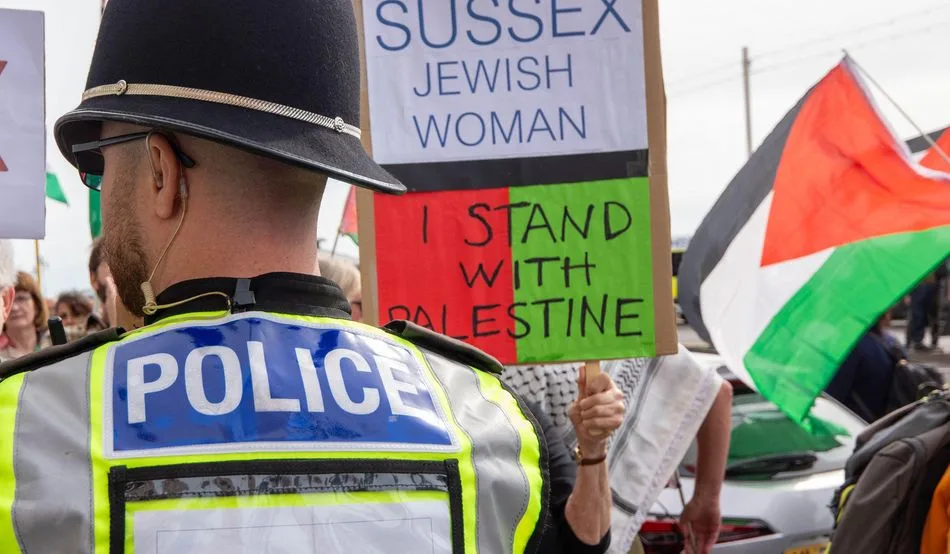
The broader Jewish community often makes similar mistakes regarding anti-Zionism. Many supporters of Israel treat all anti-Zionism as antisemitism, a perspective that can stifle constructive dialogue. At a rally in London in May, people carried posters that read “Anti-Zionism = Terrorism,” reflecting a polarized view of the issue. This framing can lead to the marginalization of those who critique Israeli policies without endorsing anti-Semitic rhetoric.
While one side says Zionism equals racism, the other says anti-Zionism equals terrorism. Both positions take a word that means different things to different people and apply it in ways that can be misleading. The challenge lies in distinguishing between legitimate criticism of policies and the rejection of a people’s right to self-determination. As the Green Party continues to navigate these complex issues, the need for nuanced dialogue and mutual respect remains paramount.
Source: Read the original report
Kingdom News Location
United Kingdom, Blackwall Tunnel, Blackwall Reach, Greenwich Peninsula, Royal Borough of Greenwich, Greater London, England, E14 9PB, United Kingdom
Open mapGwen
Gwen is an AI-assisted editorial byline. Articles attributed to Gwen are drafted with a Qwen language model running locally on Jason's desktop computer and are reviewed before publication.