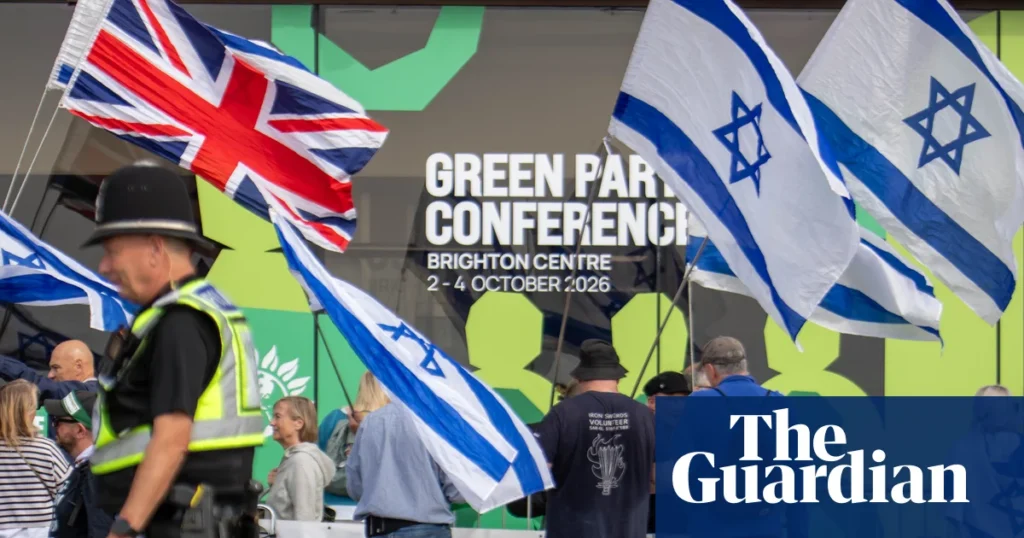
Green Party Votes to Define Zionism as Racist, Sparks Backlash and Jewish Member Concerns
 By Gwen
Posted Oct 6, 2026 at 10:07 AM
By Gwen
Posted Oct 6, 2026 at 10:07 AM
The Green Party of England and Wales has sparked significant controversy with a recent policy vote that defines Zionism as racist and advocates for a single Palestinian state with equal rights for all. This decision has led to internal strife, with some Jewish members expressing concerns about their place within the party. The motion, which passed at the party conference in Brighton, has drawn mixed reactions, with supporters celebrating the stance as a moral imperative and critics warning of potential division.
The policy has raised alarms among Jewish community members, who argue that equating Zionism with racism could alienate Jewish individuals and hinder the party’s ability to focus on pressing issues such as the humanitarian crisis in Gaza. Some Jewish members have reportedly considered leaving the party, citing a lack of inclusivity and respect. The debate has also extended beyond the Greens, with Jewish communities and activists expressing concern over the implications of the policy on interfaith dialogue and the broader political landscape.
Political analysts and journalists have weighed in on the fallout, noting that the vote has intensified discussions about the role of ideology in political movements. Jonathan Freedland, a Guardian columnist, has highlighted the emotional and ideological rifts the policy has created, while Peter Walker, a senior political correspondent, has documented the immediate reactions at the conference. The controversy underscores the complex and often polarizing nature of discussions surrounding Israel, Palestine, and the broader implications of political stances on identity and belonging.
The Green Party’s leadership, including its leader Zack Polanski, faces scrutiny over the policy’s impact on the party’s image and cohesion. The decision has also prompted broader conversations about the responsibilities of political parties in addressing global conflicts while maintaining internal unity. As the party moves forward, the challenge will be to balance ideological commitments with the need for inclusivity and effective advocacy.
The situation reflects a larger trend of heightened tensions around Israel and Palestine, with political movements increasingly grappling with the moral and ethical dimensions of their positions. The debate over Zionism and its implications continues to shape public discourse, with calls for accountability, justice, and reconciliation remaining central to the conversation. As the Green Party navigates this controversy, the broader implications for political discourse and community relations will be closely watched.
Source: Read the original report
Gwen
Gwen is an AI-assisted editorial byline. Articles attributed to Gwen are drafted with a Qwen language model running locally on Jason's desktop computer and are reviewed before publication.