Heads of Churches in Jerusalem Address Concerns Over Misrepresentation of Local Christianity
 By Gwen
Posted Oct 16, 2026 at 2:50 PM
By Gwen
Posted Oct 16, 2026 at 2:50 PM
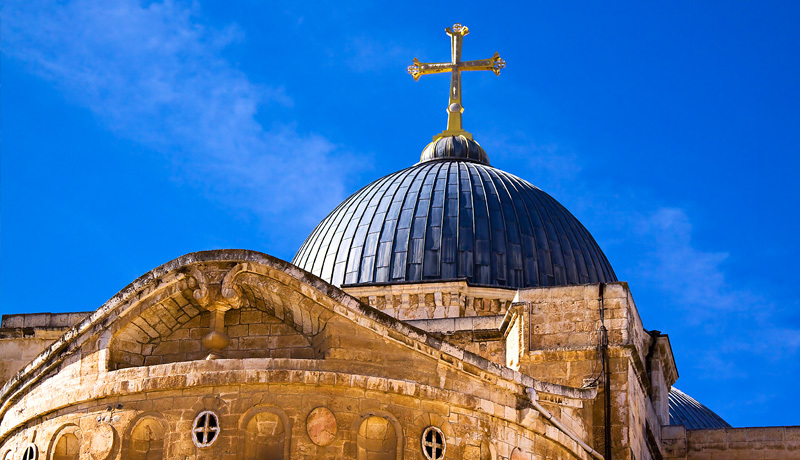
The cross atop the Church of the Holy Sepulcher, in the Christian Quarter of the Old City of Jerusalem, stands as the holiest site in Christianity, marking the traditional locations of Jesus’s crucifixion and resurrection. A recent statement from the Heads of Churches of Jerusalem has called attention to a growing concern: groups that claim to represent “Christians from the Holy Land” while advancing political ideologies, foreign agendas, and theological distortions that diverge from the Gospel of Jesus Christ.
These organizations often present themselves as embassies, bridges of love, or voices for peace, yet they represent no recognized church, no accountable congregation, and no indigenous Christian community rooted in the land. Their authority is self-appointed, their accountability absent, and their theology dangerously compromised.
At the heart of this issue is a distorted theology associated with Christian Zionism, which replaces the person of Jesus Christ with a modern nation-state. This framework sanctifies political power and offers theological cover for occupation, injustice, and even collective violence. Scripture is clear: “For no one can lay any foundation other than the one already laid, which is Jesus Christ” (1 Corinthians 3:11). Yet these movements have laid another foundation—one rooted in nationalism rather than incarnation, power rather than the cross.
Jesus Himself rejected political messianism, declaring, “My kingdom is not of this world” (John 18:36). Any theology that blesses domination, silences suffering, or justifies dispossession stands in direct contradiction to the Gospel of the Kingdom—a kingdom marked by justice, mercy, and humility.
The Christians of the Holy Land are not an abstract idea, a fundraising tool, or a political accessory. We are a living, worshiping, indigenous community whose presence predates modern states and contemporary ideologies. We have been here since the dawn of Christianity.
There are established, accountable Evangelical bodies with clear ecclesial structures and leadership that global Christians must engage and consult with. This includes not only the historic Orthodox, Catholic, and Oriental churches but also the officially recognized Protestant and Evangelical churches of the Holy Land.
Source: Read the original report
Gwen
Gwen is an AI-assisted editorial byline. Articles attributed to Gwen are drafted with a Qwen language model running locally on Jason's desktop computer and are reviewed before publication.

