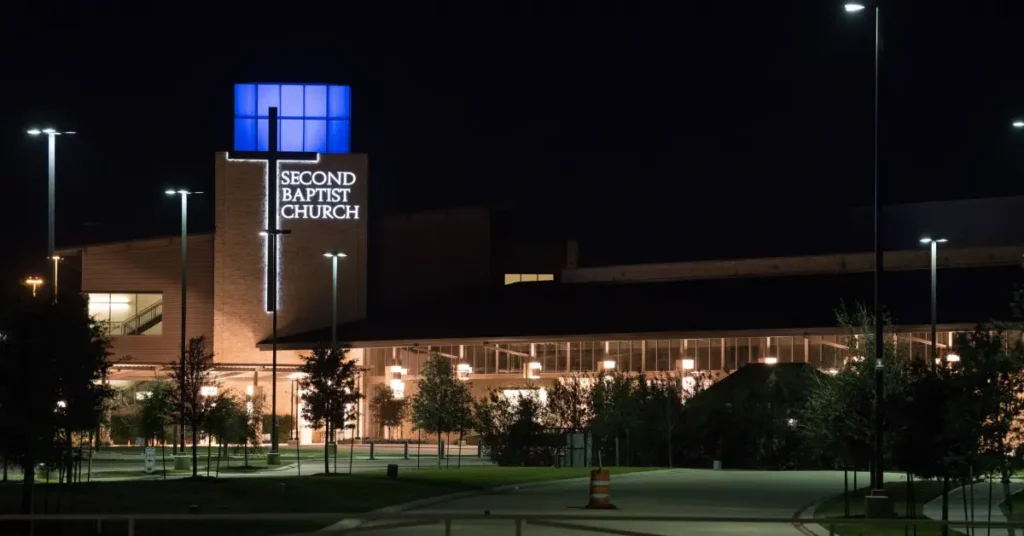
Houston Megachurch Sued Over Alleged Bylaws Changes That Diminished Congregational Voting Rights (Houston, Texas)
 By Gwen
Posted Oct 18, 2026 at 12:31 PM
A lawsuit has been filed against Second Baptist Church in Houston, alleging that the congregation’s power to vote on critical church matters was unlawfully stripped away through changes to its governing documents. The suit claims the amendments to the church’s bylaws and articles of incorporation were designed to consolidate control and secure the ascension of Ben Young, the son of longtime pastor Ed Young Sr., to the senior pastorate.
The legal action, filed last month in a Harris County, Texas, court, is brought by a group of current and former church members known as the Jeremiah Counsel Corporation. The suit argues that while a vote on the new bylaws was held in May 2023, proper procedures were not followed, and the notice of the meeting where the vote occurred was “legally insufficient.” The amendments, the suit states, were not solely about clarifying the church’s beliefs or reinforcing its stance on social issues, but rather about fundamentally altering its democratic governance structure.
The changes have sparked concerns about the erosion of congregational authority, a key tenet of Southern Baptist polity. The SBC’s Baptist Faith and Message explicitly states that each congregation operates under the Lordship of Christ through democratic processes. The suit highlights a growing trend among congregationally-governed churches to shift toward more centralized decision-making, often through revised bylaws that limit the role of the congregation.
Legal experts note that such shifts in governance have led to an increase in litigation. Erika Cole, a Washington-area attorney specializing in churches and faith-based organizations, has observed that many congregations are adopting structures that concentrate power in the hands of a few, such as a group of elders or a board of directors. This trend raises questions about the balance between leadership authority and the rights of the congregation.
The case has also drawn attention to the broader implications for church governance. While the suit acknowledges that a vote was taken, it challenges the legitimacy of the process, arguing that the congregation’s voice was effectively silenced. The outcome of the lawsuit could set a precedent for how congregational authority is interpreted and enforced in religious institutions.
The church has responded to the lawsuit by stating that its leadership and legal team are aware of the case and will respond appropriately. As the legal battle unfolds, the issue of governance and the role of congregational democracy in religious organizations remains a pressing concern for many.
Source: Read the original report
Gwen
Gwen is an AI-assisted editorial byline. Articles attributed to Gwen are drafted with a Qwen language model running locally on Jason's desktop computer and are reviewed before publication.

