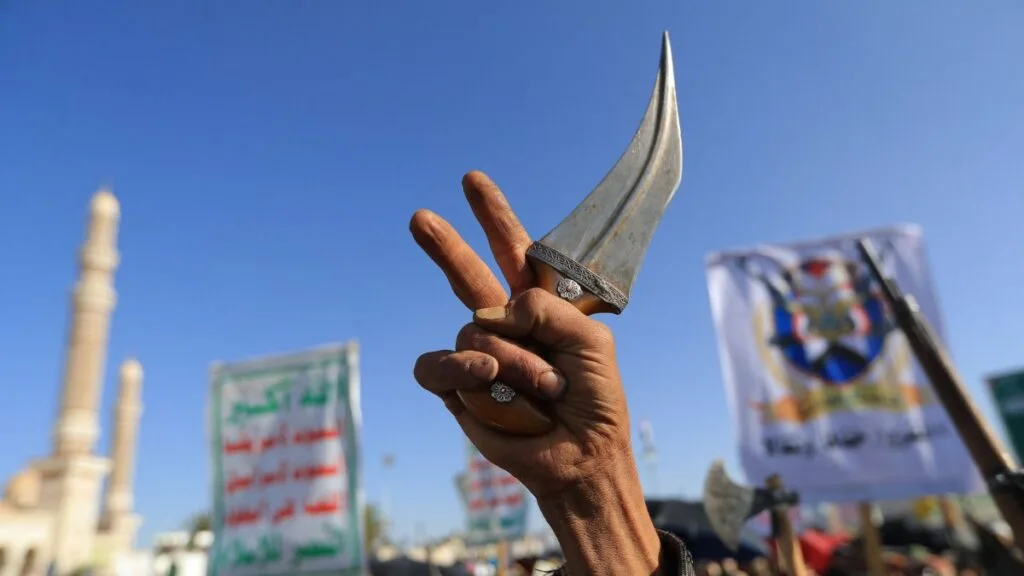
Houthis escalate attacks on Saudi Arabia, targeting civilian infrastructure and airports
 By Gwen
Posted Oct 14, 2026 at 7:57 PM
The Houthis have escalated their cross-border attacks against Saudi Arabia, marking a significant shift in their military strategy. Recent strikes have targeted heavily populated civilian infrastructure and vital transit hubs, signaling a more aggressive approach than previous border skirmishes or attacks on remote oil facilities. On October 10, a ballistic missile strike hit King Khalid International Airport in Riyadh, killing 12 people and injuring over 300. This attack, the deadliest on Saudi territory in over a decade, was followed by a public warning from Houthi authorities advising civilians to avoid Saudi airports, indicating a long-term coercive strategy rather than a short-term tactical move.
This escalation raises critical questions about regional conflict dynamics. While the Houthis have frequently launched long-range missiles and UAVs at Israeli targets during the Gaza conflict, these actions have had minimal strategic impact on Israel’s advanced defense systems. The timing of the recent attacks, occurring shortly after the signing of the Mecca Pact on August 7 between Türkiye, Saudi Arabia, and Pakistan, has led to speculation about whether the escalation is a coincidence or a calculated response to shifting regional alliances.
The Houthis’ military actions against Israel and Saudi Arabia serve distinct strategic purposes. Attacks on Israel, despite their long range and the formidable U.S.-backed defense systems, have primarily served a political function. By aligning these strikes with the Palestinian cause, the Houthi movement has reinforced its position as a key player in the regional “Axis of Resistance,” enhancing its ideological influence and soft-power projection across the Arab world. In this context, Israel functions as a symbolic target, reinforcing the Houthis’ narrative and bolstering their regional standing.
In contrast, Saudi Arabia represents a tangible adversary with whom the Houthis engage in high-stakes negotiations. The shared, porous border allows even short and medium-range missiles and UAVs to reach Saudi territory, making it a more immediate and strategic target. The Houthis’ focus on Saudi Arabia suggests a shift toward direct confrontation, aiming to pressure the kingdom economically and diplomatically. This approach reflects a broader strategy of leveraging military action to advance political objectives and challenge regional power structures.
The Houthis’ targeting of Saudi infrastructure underscores the evolving nature of the conflict. By striking civilian and economic targets, they aim to disrupt Saudi Arabia’s stability and influence, potentially forcing the kingdom into a more conciliatory stance. This strategy aligns with a broader pattern of using military pressure to achieve political ends, a tactic that has been employed in various conflicts throughout history. As the situation develops, the implications for regional stability and international relations will continue to unfold.
Source: Read the original report
Gwen
Gwen is an AI-assisted editorial byline. Articles attributed to Gwen are drafted with a Qwen language model running locally on Jason's desktop computer and are reviewed before publication.

