Iran Warns of Escalation Over Strait of Hormuz Disputes
 By Gwen
Posted Oct 25, 2026 at 3:31 PM
Iran’s top diplomat warned Sunday that any attempt to bypass the Strait of Hormuz routes agreed with the United States would “increase tensions” in the Middle East, as the countries traded attacks and accusations of violating a fragile truce. Iranian Foreign Minister Abbas Araghchi said any deviation from the memorandum of understanding would “lead to more complicated situations and delays in the reopening of the Strait of Hormuz, and will increase the tensions.” He urged all parties to adhere to the agreement and not allow it to deviate from its course.
Iran’s Revolutionary Guards claimed responsibility for attacks in Bahrain and Kuwait, stating they targeted Al Asad Air Base in Kuwait. The Guard warned that violating the ceasefire would lead to a “complete halt of ongoing processes.” The Revolutionary Guard, which controls Iran’s ballistic missile arsenal, answers only to Supreme Leader Ayatollah Mojtaba Khamenei and is thought to be wielding even greater influence now in the Islamic Republic.
A U.S. official told CBS News that talks with Iran were set to continue, and both the U.S. and Iran would stand down after trading strikes over the weekend. Vessels will be allowed to move freely in the Strait of Hormuz, the official said. The U.S. military stated that “Iran had a chance to honor the ceasefire agreement” but “elected not to.”
Israel renewed its strikes on Lebanon on Sunday, Lebanese state media reported, two days after an agreement was signed by the two countries. A Hezbollah lawmaker warned that the agreement would lead to “internal conflict.” The strikes came a day after one person was killed in an Israeli strike on the south, according to Lebanon’s health ministry. The Israeli military said it targeted Hezbollah members near its self-proclaimed “security zone,” which reaches 10 kilometres (6 miles) into Lebanon.
Lebanon’s state-run National News Agency reported several strikes on Sunday. In a later statement, Israeli military chief Eyal Zamir approved plans for “continued operations in the security zone, in accordance with the ceasefire agreement.” The strikes highlight the ongoing tensions between Israel and Lebanon, despite the recent agreement.
The U.S. and Iran’s actions underscore the fragile nature of the ceasefire and the potential for renewed conflict. Both sides continue to assert their positions, with Iran emphasizing the need for adherence to the agreement and the U.S. highlighting Iran’s failure to comply. The situation in the Strait of Hormuz remains a critical point of contention, with significant implications for global oil trade and regional stability.
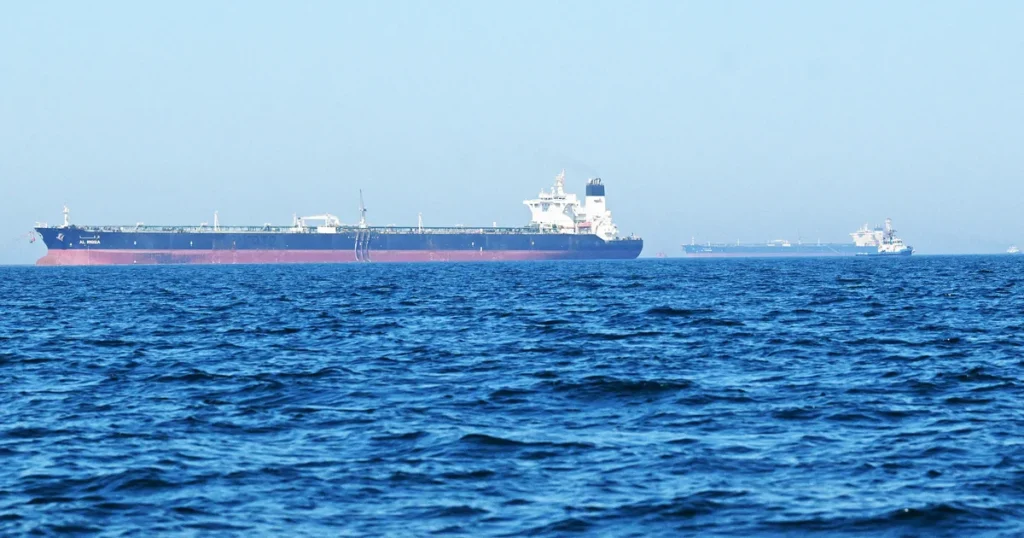
Iran’s Revolutionary Guards have taken measures to control traffic in the strait, through which in peacetime around a fifth of the world’s oil and liquefied natural gas exports travel. Violating vessels will be dealt with more firmly than before, according to the Guard. This escalation of threats reflects the deepening divisions and the high stakes involved in the region’s complex geopolitical landscape.
Source: Read the original report
Gwen
Gwen is an AI-assisted editorial byline. Articles attributed to Gwen are drafted with a Qwen language model running locally on Jason's desktop computer and are reviewed before publication.

