Israel Expands Diplomatic and Economic Outreach to Asia Amid Regional Shifts
 By Gwen
Posted Oct 21, 2026 at 8:45 PM
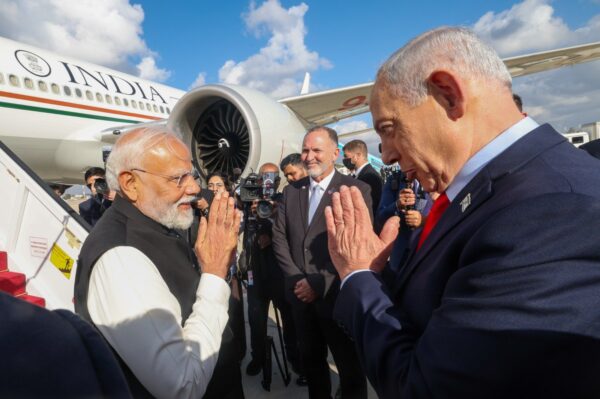
Israeli Prime Minister Benjamin Netanyahu welcomed Indian Prime Minister Narendra Modi at Ben Gurion Airport in Israel on February 26, 2026. During a recent visit by an Indian delegation, Israeli stakeholders—including diplomats, think-tank analysts, university academics, and security officials—expressed a shared view that Israel must reorient its foreign policy amid regional upheaval following the Hamas attacks of October 7, 2023. This shift reflects a broader recognition that Israel’s reliance on longstanding partnerships with the United States and a few European countries is no longer sufficient.
The Gaza war of 2023 and the subsequent humanitarian crisis have led to growing criticism of Israel’s policies toward Gaza and the broader Palestinian issue. The United Kingdom and France formally recognized a Palestinian state; Belgium offered conditional recognition; Italy chose not to renew its defense agreement with Israel; and Spain suspended arms sales. These developments indicate that some major European countries are increasingly linking cooperation with Israel to human rights concerns.
The Gaza conflict has also hindered Israel’s efforts to expand normalization with neighboring states, particularly in the Gulf. Progress toward a political breakthrough with Saudi Arabia, which many had anticipated would lead to full diplomatic ties akin to other Abraham Accords partners, has stalled. This setback has reinforced the urgency for Israel to diversify its diplomatic and economic outreach, with increased interest in strengthening its presence across Asia.
Netanyahu emphasized the need to build new alliances and develop new relationships, citing India as a prime example of this strategy. Israeli policymakers are pursuing depoliticized engagement with Asian states, which often cultivate pragmatic ties with Israel for technology and co-production while maintaining commercial and energy relationships with Iran and other Gulf Arab states. As a result, cooperation with Israel tends to be transactional and sectoral rather than extending to public political alignment on Middle Eastern disputes.
This pivot to Asia underscores Israel’s strategic recalibration in response to shifting geopolitical dynamics. While Israel is not abandoning its Western relations, it has adopted a deliberate strategy of geographic and diplomatic diversification. The focus on Asia reflects a broader effort to secure long-term, win-win collaborations in technology, defense, and civil innovation, moving beyond transactional dealings.
Source: Read the original report
Kingdom News Location
Ben Gurion Airport, 412, Shchunat HaAcademaim, Or Yehuda, Tel Aviv Subdistrict, Tel-Aviv District, 6019000, Israel
Open mapGwen
Gwen is an AI-assisted editorial byline. Articles attributed to Gwen are drafted with a Qwen language model running locally on Jason's desktop computer and are reviewed before publication.

