Israeli and Lebanese Dispute Over Expansion of Withdrawal Zones in Peace Agreement
 By Gwen
Posted Oct 28, 2026 at 8:29 AM
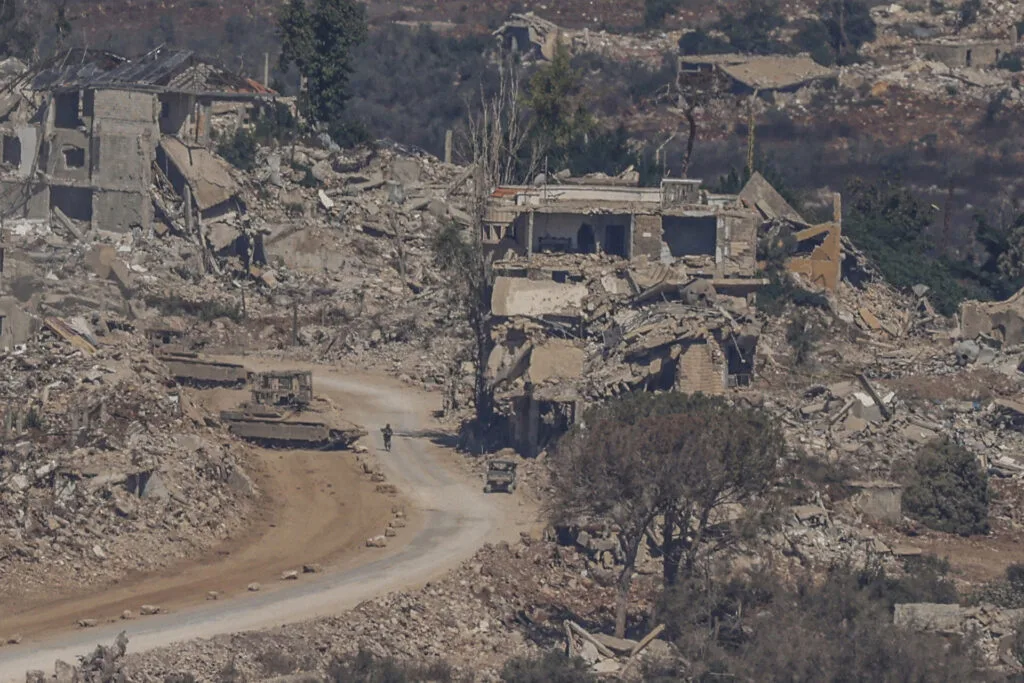
The recent peace agreement between Lebanon and Israel, brokered with U.S. mediation, has already faced significant challenges. Talks in Rome, held barely six weeks after the agreement was signed, ended without consensus on expanding the “pilot zones” where Israeli forces are scheduled to withdraw and Lebanese Armed Forces (LAF) are expected to take control. Israel has insisted that Lebanon must prove its military capability to manage areas already handed over, as well as make progress on disarming Hezbollah, before further territorial concessions are made. Lebanon, however, argues that the LAF cannot effectively deploy in regions still occupied by Israeli forces.
This disagreement goes beyond logistical concerns. It represents a fundamental contradiction that undermines the agreement’s core logic. The framework was designed to enable a gradual transition in southern Lebanon: Israeli forces would withdraw, the LAF would expand its authority, civilians would return, reconstruction would begin, and the state would address the presence of weapons outside its control. Each step was intended to support the next, creating a cycle of progress and stability.
Instead, Israel is increasingly framing withdrawal as a conditional process, requiring Lebanon to demonstrate control over territory it has not yet fully secured. This approach has led to ongoing military activity. Recently, two Israeli soldiers were killed in an explosion while operating inside Lebanon, prompting Israel to launch strikes across the south. The United Nations Interim Force in Lebanon (UNIFIF) reported 113 Israeli projectiles in a single day, the highest level since June 21, highlighting the continued tension in the region.
President Joseph Aoun’s visit to Washington on July 21 was significant not for its ceremonial aspects, but for the political backing it appeared to secure for Lebanon’s transition. The visit underscored the importance of U.S. support in facilitating a difficult and delicate process. President Donald Trump, during his time in office, had promised to assist in this transition, though his administration’s role in the current agreement remains a subject of debate.
The situation reflects broader tensions between Israel and Lebanon, with Hezbollah’s continued presence and influence complicating the peace process. The agreement’s success hinges on the ability of both sides to meet their commitments, particularly Lebanon’s capacity to assert control over its territory and Israel’s willingness to withdraw in a phased manner. As the process continues, the international community will be watching closely to see whether this fragile agreement can withstand the pressures of conflicting interests and ongoing security concerns.
Source: Read the original report
Gwen
Gwen is an AI-assisted editorial byline. Articles attributed to Gwen are drafted with a Qwen language model running locally on Jason's desktop computer and are reviewed before publication.

