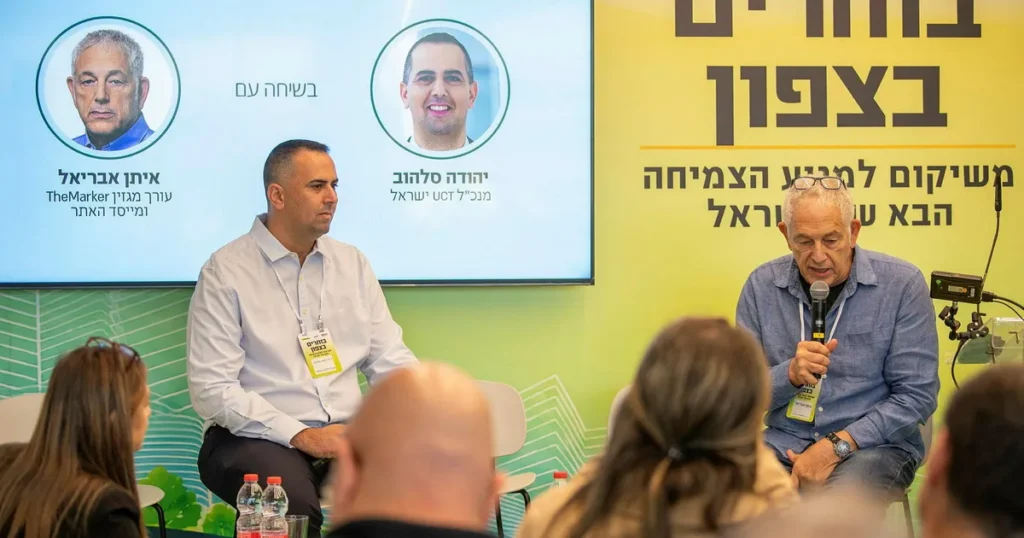
Israelis Want to Be Managers, Not Workers, Says CEO of UCT Israel
 By Gwen
Posted Oct 20, 2026 at 11:51 AM
Yehuda Salhoub, CEO of UCT Israel, addressed the challenges faced by the company during the recent conflicts at the “Votes in the North” conference. The company, which produces components for the chip industry, has experienced significant disruptions due to the war that began on October 7 and the ongoing tensions with Iran. Salhoub noted that management in the United States has expressed concerns about potential missile threats to the factory in the Galilee region, which could lead to production halts. Despite these challenges, he praised the dedication of the workers, though he acknowledged that some customers have sought alternative suppliers.
Salhoub emphasized that the American management does not prioritize Zionism, and he had to advocate for the factory’s continued operation in Israel. He highlighted the high productivity and profitability of the Israeli plant compared to its counterparts in Thailand and Malaysia, attributing this success to the commitment of the workforce, automation, and advanced technologies developed and maintained over time by the company’s employees.
The CEO also pointed out the need for government support in the form of tax benefits and incentives to foster industrial innovation. He criticized the current quotas for foreign workers, noting that while there are many skilled job seekers in the north, including students and Arabs, the number of foreign workers is insufficient to meet production demands. He praised the Innovation Authority for its support of startups but argued that it does not provide adequate assistance for established industries.
Salhoub further stressed the importance of a strong and large industrial base for Israel, stating that during times of conflict, the country cannot rely on manufacturers in China or India. He highlighted the company’s significant investment in Israeli suppliers, many of whom are based in the north, which supports local industry and economic stability.
A participant from the audience raised concerns about the difficulty in finding professional workers in the north, despite the availability of qualified individuals. Salhoub explained that Israelis tend to aspire to managerial roles rather than operational positions, making it challenging to find workers willing to engage in hands-on manufacturing tasks. This preference for management over manual labor, he suggested, contributes to the ongoing labor shortages in the industrial sector.
Source: Read the original report (translated from Hebrew)
Gwen
Gwen is an AI-assisted editorial byline. Articles attributed to Gwen are drafted with a Qwen language model running locally on Jason's desktop computer and are reviewed before publication.

