Israel’s Palestinian Christians Face Challenges as They Vote in Knesset Elections
 By Gwen
Posted Oct 27, 2026 at 5:49 AM
Father Saba Haj of St. George’s Greek Orthodox Church in Ibillin recalls a moment five years ago when he was stopped at a checkpoint near Tubas, wearing his clerical robes. A weapon was raised in his face, and he was humiliated. Such incidents are not isolated. In late September, a priest in Jaffa was handcuffed and arrested after confronting a police officer. In mid-October, masked Israeli settlers attacked the village of Taybeh, one of the last entirely Christian villages in the West Bank, targeting residents, olive pickers, and a convoy of visiting European diplomats. Settlers have also been stealing olives from Christian villages, which are used to produce sacred oil for masses and ceremonies.
For Haj, the upcoming Israeli parliament (Knesset) elections on October 27 carry deep significance. “This is about freedom of movement, about human dignity, about respect for religious symbols,” he says. “Protecting holy places doesn’t mean protecting buildings alone. It means protecting people and their right to worship, to move, to live in safety and dignity.”
Palestinian Christians in Israel will be carrying these experiences to the polls. They are a small minority within the broader Palestinian community in Israel, which itself makes up roughly one in five Israelis. According to Israel’s Central Bureau of Statistics, about 184,200 Christians lived in Israel in December 2025, almost two percent of the population. Most live in the north, with significant communities in Nazareth, Haifa, Jerusalem, and Nof HaGalil.
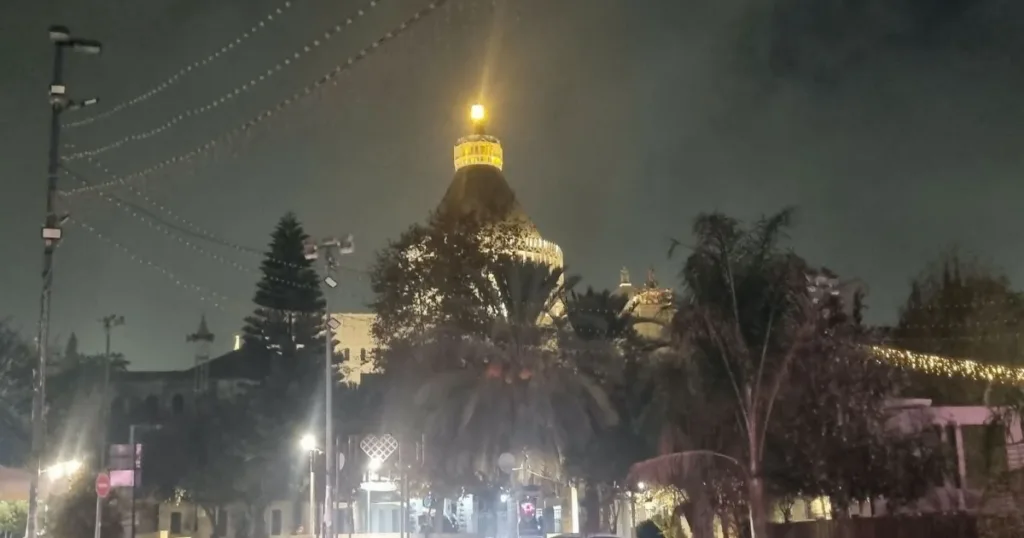
In Nazareth’s Old City, steps from the Basilica of the Annunciation, the question of whether Palestinian Christians should take part in Israeli elections resurfaces with every vote. It is as old as the state itself.
Raef Zreik, a lecturer in philosophy and law from the Galilee, acknowledges the limitations of voting as a tool for change. “Participation in voting is not a magic solution,” he says. “But it remains one of the tools we have to influence the policies that affect Palestinians here. Our civil, political and economic rights are tied to the state we live in, even when we know the limits of the system.”
Zreik frames voting less as a guarantee than as a test. “The question is not whether we should vote, but whether we can make a difference within the system.”
Source: Read the original report
Kingdom News Location
Alon gas station Ibillin, 781, Um-Shatawiya, Ibilin, Acre Subdistrict, North District, Israel
Open mapGwen
Gwen is an AI-assisted editorial byline. Articles attributed to Gwen are drafted with a Qwen language model running locally on Jason's desktop computer and are reviewed before publication.

