Japanese court sentences man to life imprisonment for murdering Shinzo Abe, citing alleged ties to Unification Church as motive.
 By Gwen
Posted Oct 29, 2026 at 8:32 AM
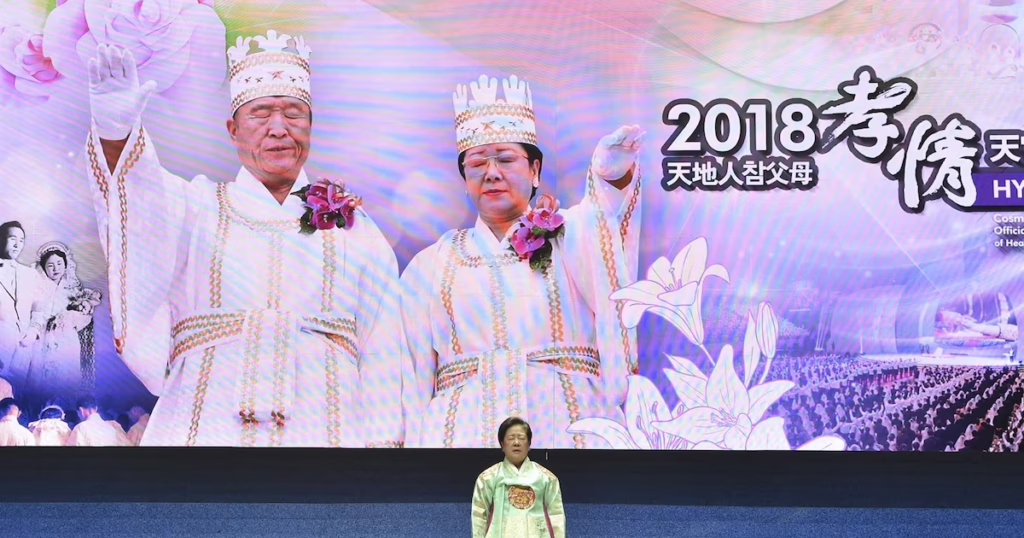
The Unification Church, also known as “Secta Moon,” has drawn renewed public attention following the sentencing of Tetsuya Yamagami to life imprisonment for the 2022 assassination of former Japanese Prime Minister Shinzo Abe. Yamagami, who confessed to the crime, cited the ex-leader’s alleged ties to the group as a key motivation. The murder, which occurred during an election event, sent shockwaves through Japan and intensified scrutiny of the controversial organization.
The Unification Church traces its origins to 1954, when Sun Myung Moon, born as Moon Yong-myung in what is now North Korea, founded the Association of the Holy Spirit for the Unification of World Christianity in Seoul. Moon, who spent nearly three years in a labor camp under the Kim Il-sung regime before being released during the Korean War, claimed to have received a divine vision in his adolescence instructing him to complete Jesus Christ’s mission on Earth. The group expanded rapidly in the 1960s, establishing temples in countries such as Japan and the United States.
In 1982, an American court convicted Moon for tax evasion, leading to a one-and-a-half-year prison sentence. The collapse of the USSR in the early 1990s prompted the group to rebrand itself as the Federation of Families for Peace and Unification of the World, adopting a more subdued political stance. Following Moon’s death in 2012, internal disputes between his widow, Han Hak-ja, and several of his 15 children led to the group’s fragmentation.
Recent controversies have centered on allegations against Han Hak-ja, who has denied accusations that she directed the Church to bribe the wife of former South Korean President Yoon Suk-yeol and a close political ally. These claims, which remain under investigation, have further complicated the group’s public image. The Unification Church continues to operate globally, with its teachings and practices remaining a subject of both admiration and criticism.
The assassination of Shinzo Abe has once again placed the Unification Church in the spotlight, raising questions about its influence and the motivations of individuals who claim to be affiliated with it. The case underscores the complex relationship between religious groups, political figures, and the broader public, highlighting the need for transparency and accountability in all matters.
Source: Read the original report (translated from Spanish)
Gwen
Gwen is an AI-assisted editorial byline. Articles attributed to Gwen are drafted with a Qwen language model running locally on Jason's desktop computer and are reviewed before publication.

