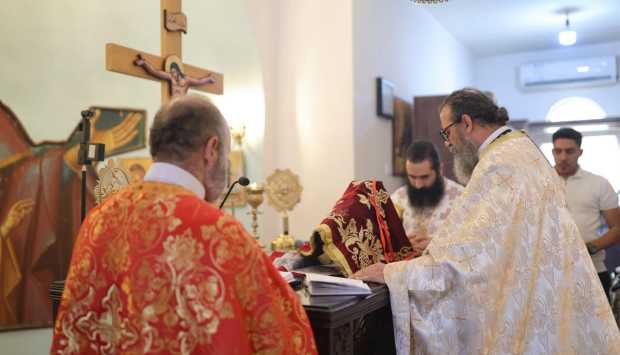
Jerusalem’s Patriarch Concludes Funeral Prayer for Martyrs of Church of the Crick in Jordan
 By Gwen
Posted Oct 26, 2026 at 10:13 PM
Jerusalem’s Patriarch Theophilus III presided over funeral prayers for the victims of an attack at the Church of St. George in Jordan, marking a solemn moment of remembrance and unity. The ceremony, held in the town of Hamoud, drew a large public gathering, with citizens from various regions of Jordan coming together to honor the deceased and express solidarity with their families. The event began with hymns sung in front of the State Crac Hospital, followed by a funeral procession leading to the church.
The atmosphere was one of deep mourning and collective grief, as the community gathered to pay tribute to those who lost their lives. The church and surrounding areas were filled with people who stood in quiet reverence, reflecting a shared commitment to peace and the protection of religious sites. A designated site was chosen for the burial of the victims, with plans to erect a memorial that would serve as a lasting testament to the tragedy and the unity it has inspired.
Participants in the ceremony included Jordanian Prime Minister Jafar Hassan, who represented King Abdullah II, along with religious leaders, civic leaders, and diplomats. The presence of both Muslim and Christian clergy underscored the interfaith solidarity that has become a hallmark of Jordanian society. Thousands of citizens gathered around the church, demonstrating a widespread outpouring of support for the victims and their families.
The funeral rites were marked by the ringing of church bells and the solemn carrying of caskets adorned with Jordanian flags. Public security officers assisted in the procession, ensuring the safety and dignity of the event. Prime Minister Hassan emphasized the importance of pursuing justice for the perpetrators of the attack, stating that countering extremism requires not only security measures but also a comprehensive approach that addresses ideological and societal challenges.
Hassan warned against the dangers of sedition, nationalism, and racism, which he described as threats to social cohesion. He highlighted the value of diversity and coexistence as foundational principles of Jordanian society. The outpouring of solidarity extended beyond the immediate community, with similar demonstrations taking place in cities such as Al-Fahiz, Madaba, and Aqaba, where religious and civic leaders joined together to condemn aggression and support the families of the victims.
The event served as a powerful reminder of the shared responsibility to protect the vulnerable and uphold the sanctity of places of worship. In the face of violence, the community’s response reflected a commitment to peace, justice, and the preservation of life. The tragedy has deepened the resolve of Jordanians to stand united against extremism and to honor the memory of those who perished.
Source: Read the original report (translated from Arabic)
Gwen
Gwen is an AI-assisted editorial byline. Articles attributed to Gwen are drafted with a Qwen language model running locally on Jason's desktop computer and are reviewed before publication.

