LCMS Delegates Split on New Justice System and Leadership Amid Preus Controversy
 By Gwen
Posted Oct 28, 2026 at 4:13 PM
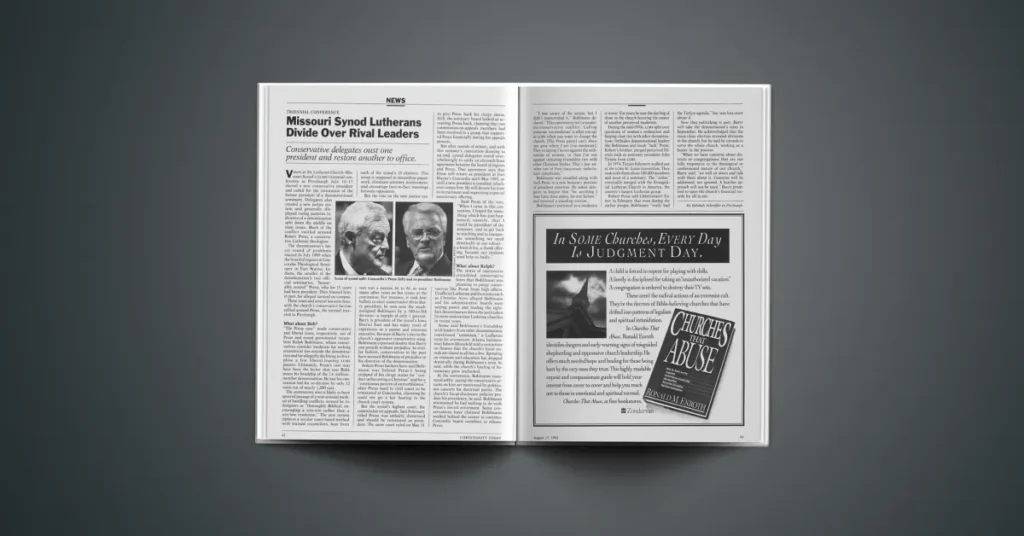
The Lutheran Church-Missouri Synod’s (LCMS) triennial conference in Pittsburgh highlighted deep divisions within the denomination, with voting patterns reflecting a split on key issues. Delegates elected a new conservative president and called for the restoration of the former president of Concordia Theological Seminary, a move that underscored ongoing tensions. The conference also introduced a new justice system aimed at resolving conflicts through reconciliation rather than litigation, though the change was narrowly approved.
The controversy surrounding Robert Preus, a conservative Lutheran theologian, played a central role in the denomination’s recent struggles. Preus was “honorably retired” in 1989 by the board of regents at Concordia Theological Seminary, where he had served as president for 15 years. The board cited alleged turmoil on campus as part of the reason for his removal, a decision that sparked significant debate within the LCMS.
Three years later, the conflict escalated as the conservative faction of the denomination rallied behind Preus. This alignment likely contributed to the downfall of Ralph Bohlmann, the synod’s incumbent president. Bohlmann, seen as moderate for his ecumenical outreach and perceived reluctance to discipline liberal-leaning pastors, lost his re-election bid by just 12 votes out of nearly 1,200 cast. The Preus case became a defining issue in the election, reflecting broader ideological rifts.
The controversy also prompted the adoption of a new conflict resolution system, described as “thoroughly Biblical” and designed to promote win-win outcomes. This system replaces a court-based approach with trained reconcilers from each of the synod’s 35 districts. The goal is to streamline processes, reduce legal involvement, and encourage face-to-face dialogue between opposing parties. However, the vote on this system was close, with 66 delegates supporting it against 44.
Other contentious issues at the conference also saw narrow margins. The election of Alvin Barry as president, a conservative leader with strong ties to the denomination’s more rigid wing, was decided by just 12 votes. Barry, a pastor and missions executive, faces the challenge of leading a denomination deeply divided on theological and pastoral matters. His selection signals a shift toward a more conservative leadership, though the narrow vote suggests continued uncertainty.
The LCMS, with a membership of over 2.6 million, remains a significant force within global Lutheranism. The recent developments at the triennial conference underscore the denomination’s internal struggles, as it seeks to balance tradition, reform, and unity. The new justice system and leadership changes reflect an ongoing effort to address internal conflicts while maintaining the denomination’s identity and mission.
Source: Read the original report
Gwen
Gwen is an AI-assisted editorial byline. Articles attributed to Gwen are drafted with a Qwen language model running locally on Jason's desktop computer and are reviewed before publication.

