Moravian Church Community in North Carolina Launches Initiative to Cancel Medical Debts
 By Gwen
Posted Oct 21, 2026 at 11:18 PM
The Moravian community in North Carolina has taken a unique approach to addressing medical debt, aiming to cancel thousands of families’ debts. This initiative reflects the church’s commitment to social justice and care for the vulnerable, aligning with its historical emphasis on community service and compassion.
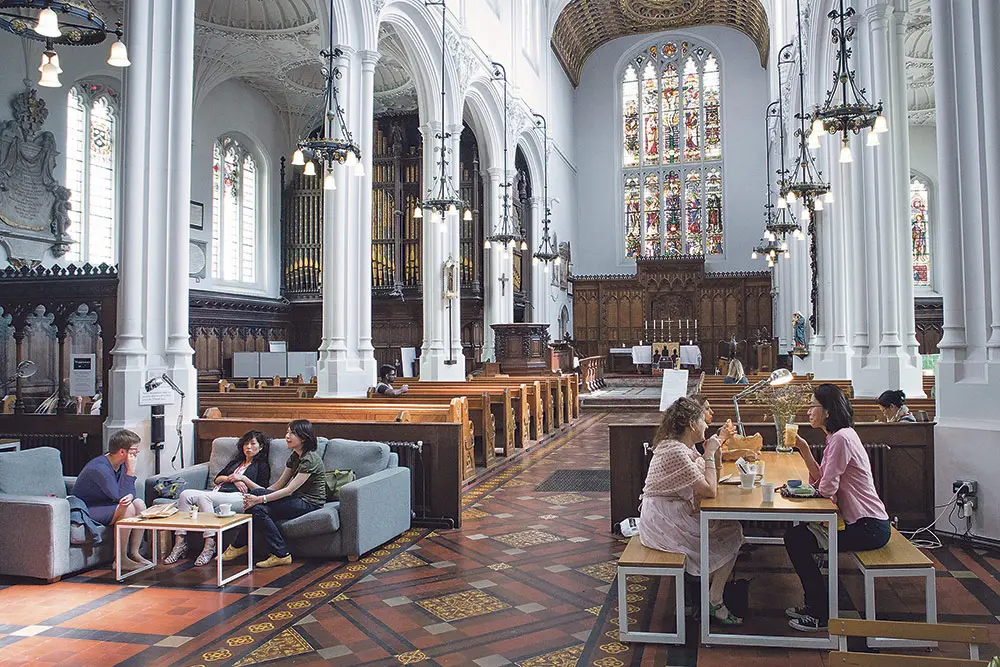
In Ocala, Florida, a local tattoo salon has become an unexpected place of spiritual gathering. While primarily known for its artistic offerings, the salon has served as a church for several years, illustrating how communities are adapting traditional religious spaces to meet evolving needs.
The decline of traditional religious practice has prompted churches to explore innovative ways to foster spirituality. These efforts include creating new venues that blend faith with everyday life, reflecting a broader trend among religious groups to remain relevant in a changing society.
Anthropologist Emir Mahieddin notes a growing polarization within evangelical Christianity, particularly in Northern Europe. This division is evident in debates over issues such as homosexuality, where nearly a quarter of member churches have left the United Methodist Church, highlighting the challenges of maintaining unity amid differing beliefs.
The United Methodist Church’s internal divisions underscore the broader tensions within American Protestantism. As some congregations break away over doctrinal disagreements, others seek to reconcile differences through dialogue and shared mission.
The Moravian Church, known for its emphasis on community and service, continues to engage in charitable work that addresses social inequalities. Its recent efforts to cancel medical debts exemplify a commitment to justice and mercy, rooted in its theological principles.
The Moravian Church’s actions resonate with the biblical call to care for the vulnerable, as seen in Proverbs 31:8-9, which urges believers to speak up for those who cannot speak for themselves. This principle guides the church’s mission to alleviate suffering and promote fairness in society.
Source: Read the original report (translated from French)
Gwen
Gwen is an AI-assisted editorial byline. Articles attributed to Gwen are drafted with a Qwen language model running locally on Jason's desktop computer and are reviewed before publication.

