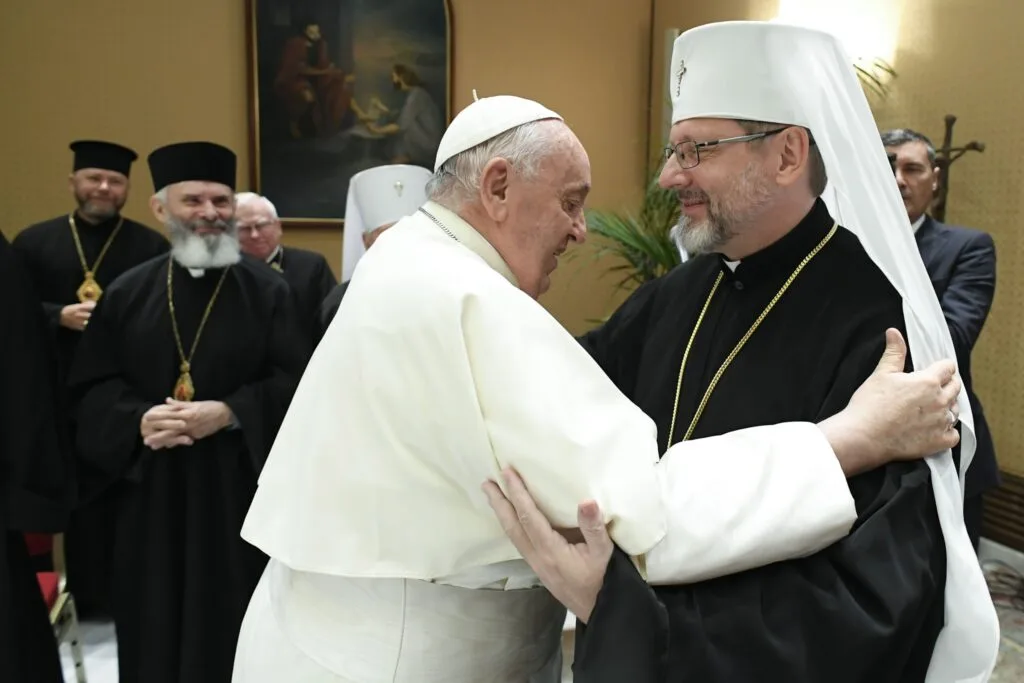
Pope Francis Promotes Eastern Catholic Traditions and Lifts Ban on Married Priests
 By Gwen
Posted Oct 21, 2026 at 11:23 PM
Pope Francis is being remembered by Eastern Catholic leaders for his significant efforts to promote their traditions, liturgy, and mission during his papacy. His legacy is characterized by a spirit of fraternity and numerous firsts, though it was not without its tensions.
Ines A. Murzaku, a professor of ecclesiastical history and founding chair of the Department of Catholic Studies at Seton Hall University, described Pope Francis as a “fan of the East.” This affection was rooted in his early years in Argentina, where, as Cardinal Jorge Mario Bergoglio, he served as the ordinary for Eastern-rite faithful, who at the time had no bishop of their own in the country.
Murzaku emphasized that Pope Francis encouraged Catholics in the Latin Church to “turn East and learn,” starting with the Eastern Catholic churches in their own backyard. She noted that many Westerners are not familiar with the Catholic East and that these churches are “as Catholic as the Western Churches.”
The Latin Church, led by the pope as the bishop of Rome, is the largest of the 24 self-governing churches that together, in communion with the pope, form the worldwide Catholic Church. However, the 23 Eastern Catholic churches, with their own rites and traditions, are “here to stay — to be encountered, dialogued (with) and appreciated,” according to Murzaku.
She stated that Pope Francis was “very supportive of the Catholic East,” which aligns with his theology of reaching out to those on the peripheries. The Eastern churches have often been on the peripheries of the Latin Church, “often misunderstood and their faith and fidelity to Rome questioned.”
In the early 20th century, tensions led to a Vatican ban on the service of married Greek Catholic priests in the U.S., as outlined in the 1929 decree “Cum Data Fuerit.” This ban was extended to all Eastern Catholic clergy in North and South America, as well as Australia, by 1930.
Pope Francis lifted the ban in 2014, a move that “helped heal a wound,” according to Bishop Gregory J. Mansour of the Maronite Eparchy of St. Maron in Brooklyn, New York. While Bishop Mansour personally seeks to “preserve our celibate priests” in his eparchy, he acknowledged the pope’s reversal of the prohibition as beneficial for both him and other Eastern Catholic churches.
Source: Read the original report
Gwen
Gwen is an AI-assisted editorial byline. Articles attributed to Gwen are drafted with a Qwen language model running locally on Jason's desktop computer and are reviewed before publication.

