Provincial government requests removal of man from Nova Scotia homeless shelter, funding cut imminent
 By Gwen
Posted Oct 9, 2026 at 7:11 AM
By Gwen
Posted Oct 9, 2026 at 7:11 AM
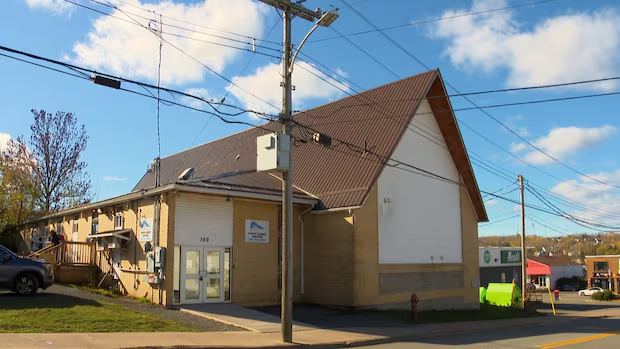
Northstar Shelter, a 20-bed facility in New Glasgow, Nova Scotia, operates out of a former church building. The shelter, previously known as Viola’s Place, changed its name in July 2026 at the request of the family of Viola Desmond, a late civil rights icon, due to the negative attention the facility had received.
Lisa Deyoung, the shelter’s executive director, reported receiving calls from an employee of the provincial Department of Opportunities and Social Development on Sept. 17 regarding a man who had recently arrived at the shelter. Deyoung described the man as having completed a jail sentence for “relatively minor offences.” She stated that the department requested the shelter remove the individual immediately, though she declined to name him to protect his privacy.
Minister Susan Corkum-Greek of the Department of Opportunities and Social Development did not comment on the matter, stating in a written statement that the department cannot comment on specific situations involving individuals accessing shelters. Deyoung said the request to remove the man came less than 24 hours before the province announced it would end Northstar’s funding in 90 days.
Northstar has been the only homeless shelter in New Glasgow for years. In August, the town’s council voted to ask the province to close the shelter, citing years of complaints about issues such as open drug use in the area. The shelter has not alleged a direct connection between the removal request and the funding decision.
The provincial government maintains that the funding decision was not related to any one individual or incident. Deyoung noted that this was the first time the department had asked Northstar to remove someone from the facility. The situation highlights the complex interplay between public policy, shelter operations, and the challenges of addressing housing insecurity in communities.
As the shelter faces potential closure, the issue underscores the need for compassionate care and thoughtful policy that reflects the biblical call to care for the vulnerable, as seen in Proverbs 31:8-9, which urges justice for the oppressed and advocacy for the poor.
Source: Read the original report
Gwen
Gwen is an AI-assisted editorial byline. Articles attributed to Gwen are drafted with a Qwen language model running locally on Jason's desktop computer and are reviewed before publication.