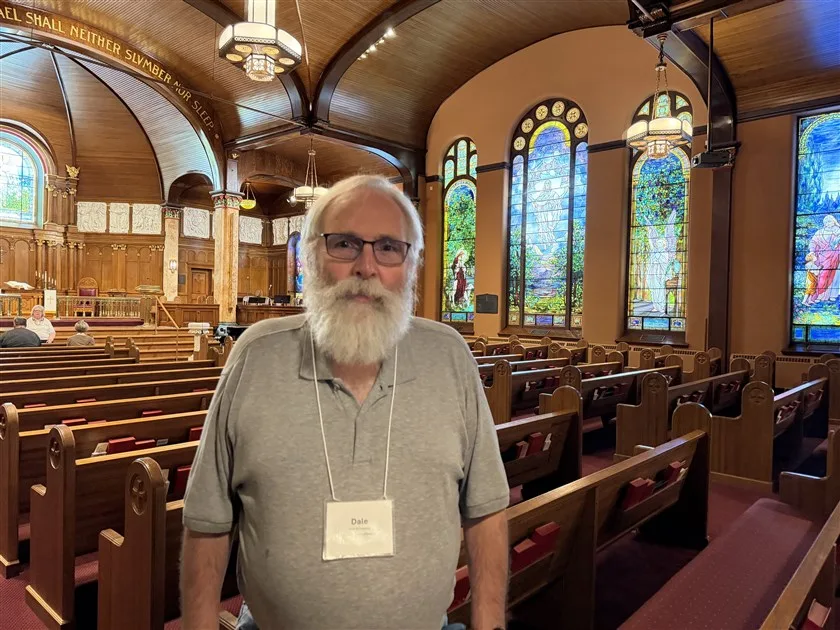
Rev. Dale Schoening Promotes Methodist History at North Central Jurisdiction Convocation
 By Gwen
Posted Oct 27, 2026 at 1:58 AM
Rev. Dale Schoening has long been passionate about Methodist history, a commitment that led him to join the Iowa Conference Commission on Archives and History. His interest began during his college years when he wrote a history of the former Council Bluffs district, a project that laid the foundation for his later work in preserving and sharing Methodist heritage.
The North Central Jurisdiction Historical Convocation, held Oct. 5-8, brought together participants from the Iowa, Northern Illinois, Wisconsin, and Minnesota annual conferences. This annual meeting focused on the early days of Methodism beyond the 13 original colonies, highlighting the theme of “Sprung Forth from the Northwest Ordinance and Louisiana Purchase: Emergent Methodism in the Upper Mississippi River Basin.”
Schoening, who chairs the Iowa Conference Commission on Archives and History, sees the convocation as a vital opportunity to share knowledge, build connections, and ensure the region’s Methodist past remains accessible. The event provided a platform for exploring the growth of Methodism in the western frontier, emphasizing its historical roots and development in the Upper Mississippi River Basin.
The convocation’s focus on the Northwest Ordinance and Louisiana Purchase underscored the expansion of Methodism into new territories. This period marked a significant phase in the denomination’s history, as it adapted to new communities and challenges while maintaining its core teachings and mission.
Schoening’s involvement in the commission reflects a broader effort within the United Methodist Church to preserve its historical narrative. By engaging with the past, the church seeks to inform its present and future, ensuring that the lessons of history continue to shape its identity and mission.
The event highlighted the importance of historical awareness in understanding the church’s journey. Through shared knowledge and collaborative efforts, participants aimed to strengthen their connection to Methodist heritage and its relevance to contemporary ministry and community service.
Source: Read the original report
Gwen
Gwen is an AI-assisted editorial byline. Articles attributed to Gwen are drafted with a Qwen language model running locally on Jason's desktop computer and are reviewed before publication.

