Rhode Island’s Eastern Catholic Communities Highlight Liturgical Diversity and Historical Roots
 By Gwen
Posted Oct 21, 2026 at 5:38 PM
The Eastern Catholic Churches in communion with Rome offer a rich tapestry of liturgical and spiritual traditions within the United States. In Rhode Island, three Eastern Catholic communities coexist with the Latin Catholic Church, contributing to the state’s diverse religious landscape. These communities, known as sui iuris churches, maintain full communion with the Pope while preserving their unique rites and customs. The shared faith in Christ unites them, yet their distinct liturgical practices reflect centuries of cultural and historical development.
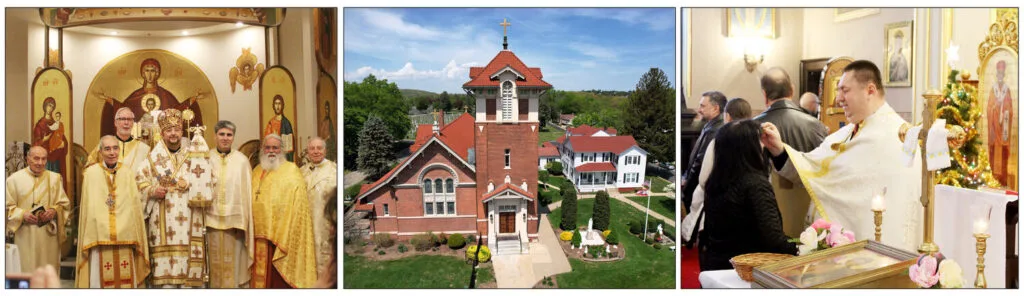
The Melkite Greek Catholic Church, one of the Eastern Catholic traditions present in Rhode Island, traces its origins to the early Christian era. The name “Melkite” comes from a Syriac word meaning “royal,” reflecting the church’s historical alignment with the emperor and the pope following the Council of Chalcedon. Today, the Melkite liturgy is characterized by its ornate beauty, with gilded icons, elaborate vestments, and the use of incense and liturgical fans during the Gospel procession. These elements create a visually and spiritually immersive experience for worshippers.
The Melkite Church, though often referred to as “Greek,” is part of the Byzantine Rite, which encompasses 14 distinct national churches. The liturgy of the Melkites includes the works of St. John Chrysostom and St. Basil, with much of the chanting in Greek. Arabic is also used, particularly in regions where the church has a strong presence, such as Syria, Lebanon, Egypt, and Jordan. In America, English is commonly used for readings and sermons, bridging the gap between tradition and contemporary worship.
Bishop Francois Beyrouti of the Melkite Church emphasizes the hierarchical structure of the Eastern Catholic Churches. He explains that the Bishop of Rome, as the successor of St. Peter, holds a unique position as the leader of the apostles. Patriarchs, on the other hand, are successors of churches founded by other apostles, such as those in Constantinople, Alexandria, and Jerusalem. This structure ensures that each Eastern Catholic Church maintains its own governance while remaining in full communion with the Pope.
The Melkite community in Rhode Island has roots tracing back to the 1870s, when a small wave of Syrian immigrants brought their faith to the state. By 1909, the community had grown large enough to establish an independent presence. This historical development highlights the resilience and adaptability of Eastern Catholic traditions in new environments, preserving their identity while integrating into local communities.
The presence of Eastern Catholic Churches in Rhode Island underscores the diversity within the broader Catholic Church. These communities contribute to the spiritual and cultural richness of the region, offering unique liturgical experiences that reflect their heritage and faith. Their continued existence and growth serve as a testament to the enduring nature of the Catholic Church’s traditions and the importance of preserving them.
Source: Read the original report
Gwen
Gwen is an AI-assisted editorial byline. Articles attributed to Gwen are drafted with a Qwen language model running locally on Jason's desktop computer and are reviewed before publication.

