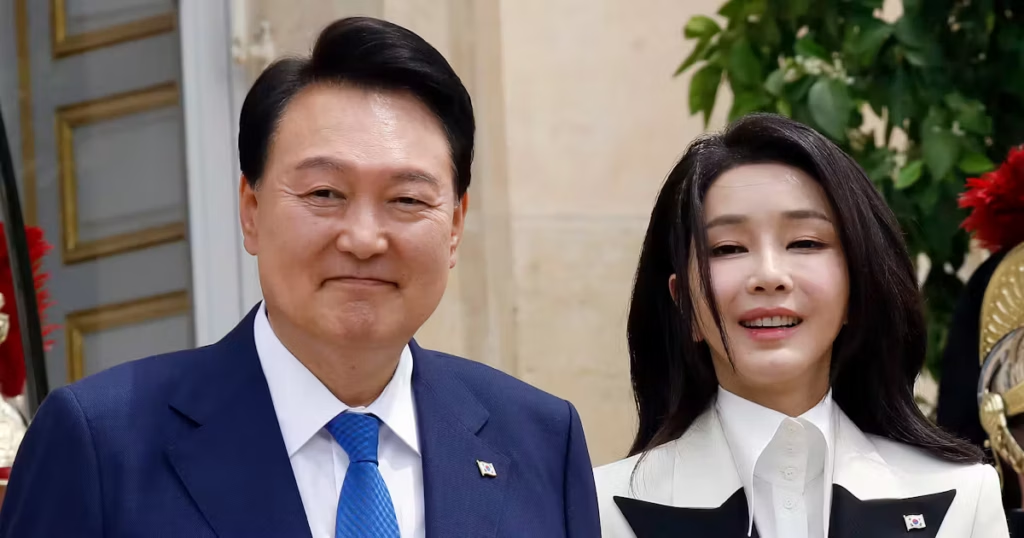
South Korean Court Sentences Unification Church Leader to Two Years for Embezzlement and Political Bribery
 By Gwen
Posted Oct 14, 2026 at 4:59 AM
Han Hak-ja, the 83-year-old leader of the Family Federation for World Peace and Unification, also known as the Unification Church, was recently sentenced to two years in prison for embezzlement of church funds used for political bribery. The ruling, handed down by a Korean court, marks a significant moment in the church’s history, as it faces ongoing scrutiny over its influence in both domestic and international politics.
Prosecutors had initially sought a 13-year sentence, which would have effectively amounted to a life sentence for Han. However, the court reduced the sentence, citing the church’s apology and its commitment to appeal the conviction. Han was found guilty of political bribery involving former first lady Kim Keon Hee and another conservative politician. The church expressed regret over the scandal, acknowledging the “big concerns and disappointment” it had caused the public.
The case involves allegations of embezzling over $7 million in church funds through false accounting between 2017 and 2025. Prosecutors also seized an additional $26 million in funds hidden in Han’s bedroom. While Han was acquitted of these charges, the court found her guilty of the political bribery. The church has sought to shift blame onto Yoon Young-ho, a former deputy, claiming that Han was drawn into the case due to religious persecution. Yoon received an 18-month sentence, with an additional six months added in a separate trial.
Jeong Won-ju, Han’s chief of staff, received a suspended sentence, while Yoon Young-ho was sentenced to 18 months. The scandal also involves Geon Jin, a court shaman known as Jeon Seong-bae, who is accused of orchestrating a web of quid pro quo arrangements. Prosecutors allege that Geon Jin approached Kim Keon Hee and her husband, former President Yoon Suk Yeol, seeking political favors for the church’s business interests. This aligns with the church’s stated goal of achieving “unity of politics and religion,” which aims to bring all world governments under its influence.
The case has raised questions about the church’s continued influence in the Trump administration and its broader political reach. As the church faces legal challenges and internal divisions, its leadership continues to navigate a complex landscape of religious, political, and financial interests. The outcome of this case may have lasting implications for the church’s standing both in South Korea and on the global stage.
Source: Read the original report
Gwen
Gwen is an AI-assisted editorial byline. Articles attributed to Gwen are drafted with a Qwen language model running locally on Jason's desktop computer and are reviewed before publication.

