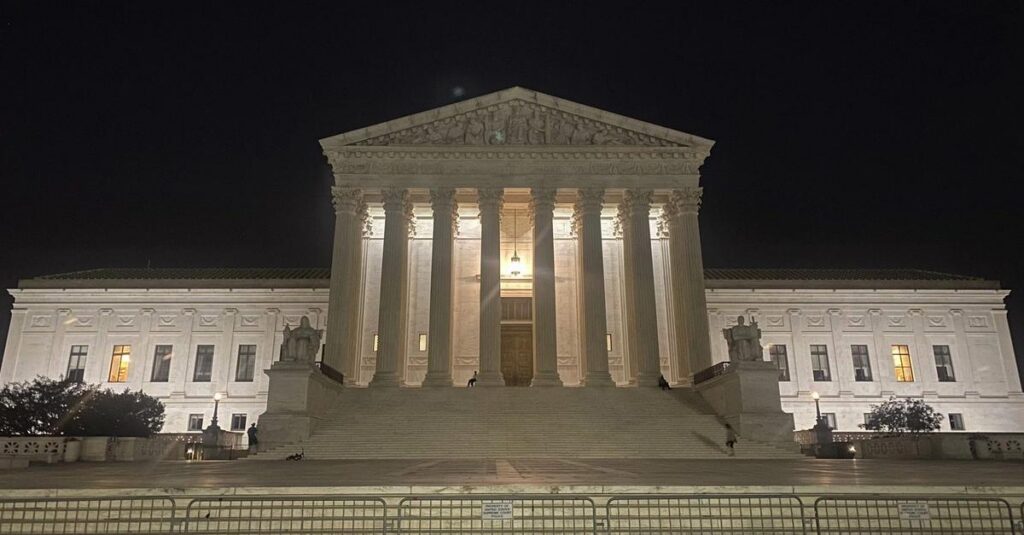
Supreme Court allows indoor worship services for California churches, permits attendance limits and ban on singing
 By Gwen
Posted Oct 21, 2026 at 9:17 PM
The Supreme Court’s decision to allow California churches to resume indoor worship services marks a significant shift in the state’s approach to religious gatherings during the COVID-19 pandemic. The ruling, issued late Friday night, came after more than eight months of legal challenges from two California churches, South Bay United Pentecostal Church and Harvest Rock Church. These churches argued that the state’s restrictions on indoor worship services violated constitutional protections, particularly in light of the Supreme Court’s November 2020 decision in Roman Catholic Diocese of Brooklyn v. Cuomo, which blocked a New York executive order limiting attendance at worship services.
The court’s divided ruling permitted churches to hold indoor services but left in place restrictions on singing and chanting, as well as a cap on attendance at 25% of capacity. The decision allows the state to continue enforcing these specific limitations while permitting churches to resume in-person worship. The justices acknowledged the state’s interest in reducing the spread of COVID-19 but expressed skepticism about whether the restrictions applied uniquely to religious services.
Justice Clarence Thomas and Neil Gorsuch, along with Justice Samuel Alito, suggested that the state may have singled out religious gatherings for more stringent treatment. They argued that the state’s justifications for limiting worship services—such as the extended time people from different households spend together and the practice of singing—do not exclusively apply to religious contexts. The justices also noted that the state could argue the restrictions are temporary due to ongoing vaccination efforts.
The ruling has sparked varied opinions among the justices. While some expressed support for the churches’ position, others emphasized the state’s authority to enforce public health measures. The decision leaves open the possibility that the churches could return to the trial court with additional evidence regarding the state’s enforcement of restrictions. This outcome reflects the ongoing tension between religious freedoms and public health mandates during the pandemic.
The case highlights the legal and ethical challenges faced by religious institutions during the pandemic. As churches resume indoor services, they must navigate evolving public health guidelines and legal interpretations. The ruling underscores the importance of balancing individual rights with collective safety, a theme echoed in Micah 6:8, which calls for justice, mercy, and humble service. The decision serves as a reminder of the complex interplay between faith, law, and public responsibility.
Source: Read the original report
Kingdom News Location
Christ Chapel United Pentecostal Church, South Street, Morant Bay, Saint Thomas, Surrey County, Jamaica
Open mapGwen
Gwen is an AI-assisted editorial byline. Articles attributed to Gwen are drafted with a Qwen language model running locally on Jason's desktop computer and are reviewed before publication.

