UAE and Israeli intelligence services surprised by Saudi-Pakistan-Turkey defense agreement in Mecca
 By Gwen
Posted Oct 17, 2026 at 6:26 AM
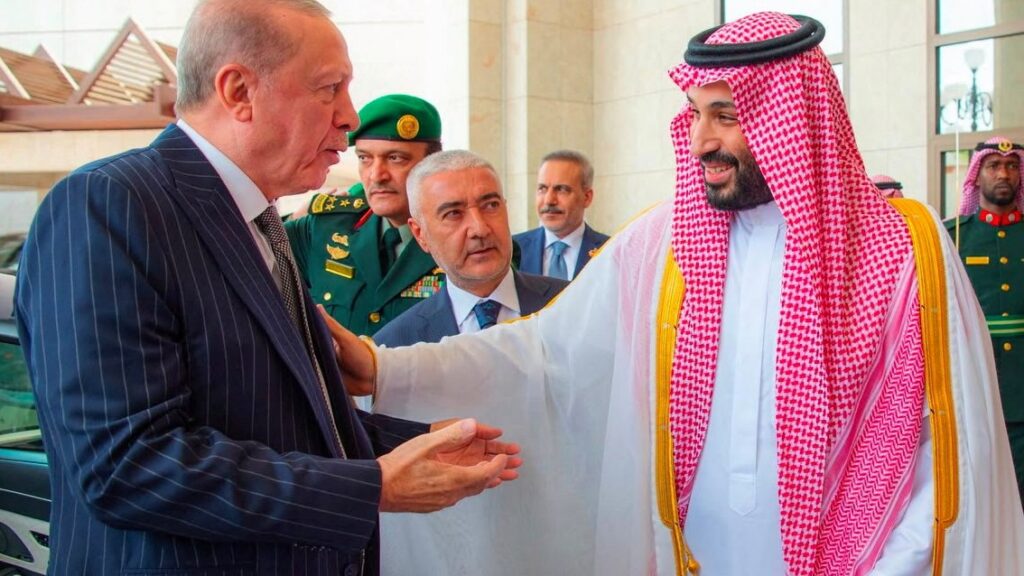
Turkish President Tayyip Erdogan met with Saudi Crown Prince Mohammed bin Salman in Mecca on 7 August 2026, ahead of the signing of a defense deal involving Saudi Arabia, Pakistan, and Turkey. Intelligence services in the United Arab Emirates and Israel were caught off guard by the agreement, as the Emiratis only learned of it two weeks prior to its announcement.
Turkey’s Foreign Minister Hakan Fidan had previously expressed a desire to form a Muslim alliance in response to Israel’s actions in Gaza. Despite facing challenges, Fidan remained committed to this initiative. Meanwhile, Saudi Arabia’s Crown Prince MBS maintained a more cautious approach, making strategic moves that could be interpreted as aligning with either side in the Iran conflict.
In July 2026, Saudi Energy Minister Prince Abdulaziz bin Salman signed a peaceful nuclear cooperation agreement in Washington. However, U.S. President Donald Trump reportedly undermined the deal by insisting that Saudi Arabia normalize relations with Israel. This move raised questions about the evolving dynamics between the U.S., Saudi Arabia, and Israel.
Saudi air strikes targeted militias in southern Iraq that were reportedly commanded by Iranian Revolutionary Guard Corps (IRGC) advisers. Saudi intelligence, according to regional sources, had received warnings of potential cross-border raids into Kuwait. Additionally, Saudi jets attacked Sanaa in Yemen as the ceasefire with the Houthis collapsed, with rockets and drones hitting Saudi oil facilities.
To allies involved in the U.S.-led military campaigns against Iran, the situation appeared to indicate that MBS was finally aligning with their objectives. However, for Gulf leaders, including MBS, the decision to support these campaigns was not straightforward. They faced conflicting advice and had their own strategic considerations.
The ongoing conflicts in Iran, Gaza, and Lebanon, which have become frozen wars, are reshaping the region. The failure to achieve military victories in these conflicts has led to significant consequences for allies hosting U.S. bases. Saudi foreign policy analysts, many of whom were educated in the West, have witnessed the U.S. arming Israel’s actions in Gaza, leading them to reconsider their alignment with Western powers.
As the region continues to shift, the Mecca Joint Defence Agreement and the broader geopolitical landscape reflect the complex and evolving relationships among nations. These developments underscore the need for peace, justice, and wise diplomacy, as highlighted in Micah 6:8, which calls for acting justly, loving mercy, and walking humbly with God.
Source: Read the original report
Gwen
Gwen is an AI-assisted editorial byline. Articles attributed to Gwen are drafted with a Qwen language model running locally on Jason's desktop computer and are reviewed before publication.

