Zionist Movement Focused on Practical Action, Institutional Organization, and Education to Build State and Support Jewish Communities
 By Gwen
Posted Oct 1, 2026 at 1:51 PM
By Gwen
Posted Oct 1, 2026 at 1:51 PM
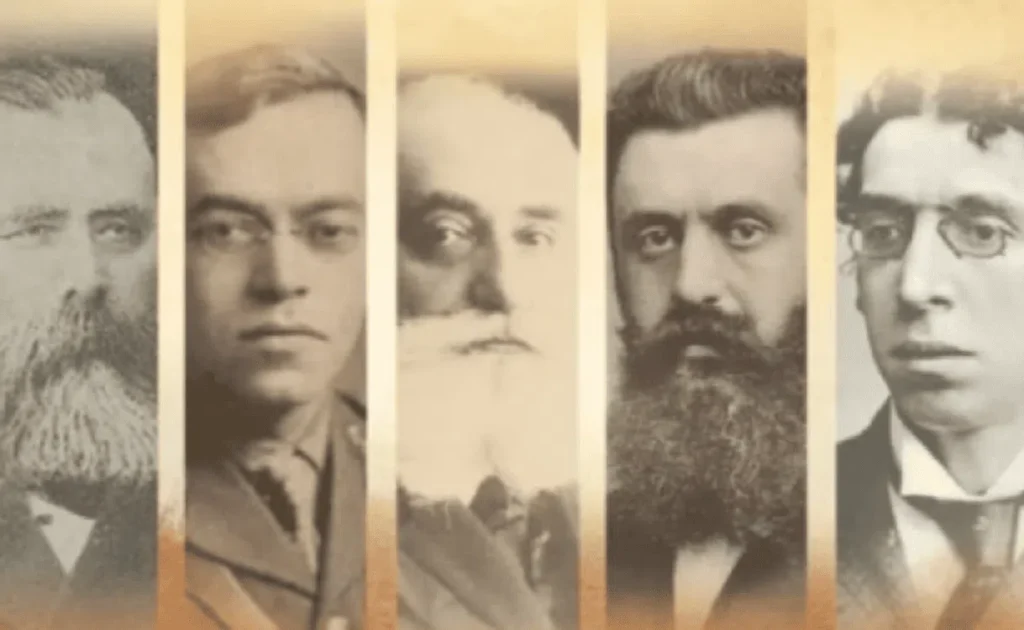
The Zionist movement emerged with a clear focus on transforming ideals into tangible outcomes. Pioneers such as Theodor Herzl, David Ben-Gurion, Chaim Weizmann, and Max Nordau played pivotal roles in steering Zionism from theoretical discourse to practical action. They emphasized the necessity of building a state through concrete efforts, including agricultural development, settlement initiatives, and the establishment of military capabilities. This approach, rooted in scientific efficiency and fieldwork, was seen as essential for creating a stable and sovereign Jewish homeland.
The movement’s organizational structure was another key factor in its success. From the first Zionist Congress in Basel in 1897, Zionists developed a robust framework that included diplomatic engagement and institutional mechanisms. The creation of the Jewish National Fund (Keren Kayemet LeYisrael) exemplifies this, as it facilitated land purchases in Palestine and supported settlement activities. The Jewish Agency, functioning as a de facto governing body, managed immigration, education, security, and economic development in the region before the state’s formal establishment.
A reciprocal support system also played a crucial role. This network provided financial assistance and social care to Jewish communities both within Palestine and the diaspora. Interest-free loans and support systems enabled individuals to start anew, reinforcing a sense of collective responsibility and mutual aid. Such structures helped sustain the movement through periods of hardship and uncertainty.
Education was another cornerstone of the Zionist movement. Since the late eighteenth century, Zionists prioritized the intellectual development of Jewish youth. This emphasis on education contributed to the emergence of notable Jewish scientists and thinkers in the early twentieth century. As Jewish communities integrated into European societies, the focus of study and intellectual engagement shifted from religious texts to natural sciences and mathematics, aligning with broader secular trends.
The Zionist movement’s commitment to education and scientific advancement was further shaped by the challenges faced in European universities. Restrictions imposed by institutions in Germany and Austria limited Jewish academics from holding high positions, prompting a reorientation toward fields where Jewish scholars could excel. This shift not only advanced Jewish intellectual contributions but also reinforced the movement’s vision of a state built on knowledge and innovation.
The Zionist movement’s ability to adapt and respond to external pressures underscores its resilience. By focusing on practical action, institutional development, and educational advancement, Zionists created a framework that enabled the establishment of a sovereign state. This model of organizing for collective goals, supported by a strong emphasis on education and mutual aid, remains a significant historical example of how ideological movements can translate into lasting political realities.
Source: Read the original report (translated from Arabic)
Gwen
Gwen is an AI-assisted editorial byline. Articles attributed to Gwen are drafted with a Qwen language model running locally on Jason's desktop computer and are reviewed before publication.