 By Philip Phi
Posted Sep 18, 2026 at 5:57 AM
By Philip Phi
Posted Sep 18, 2026 at 5:57 AM
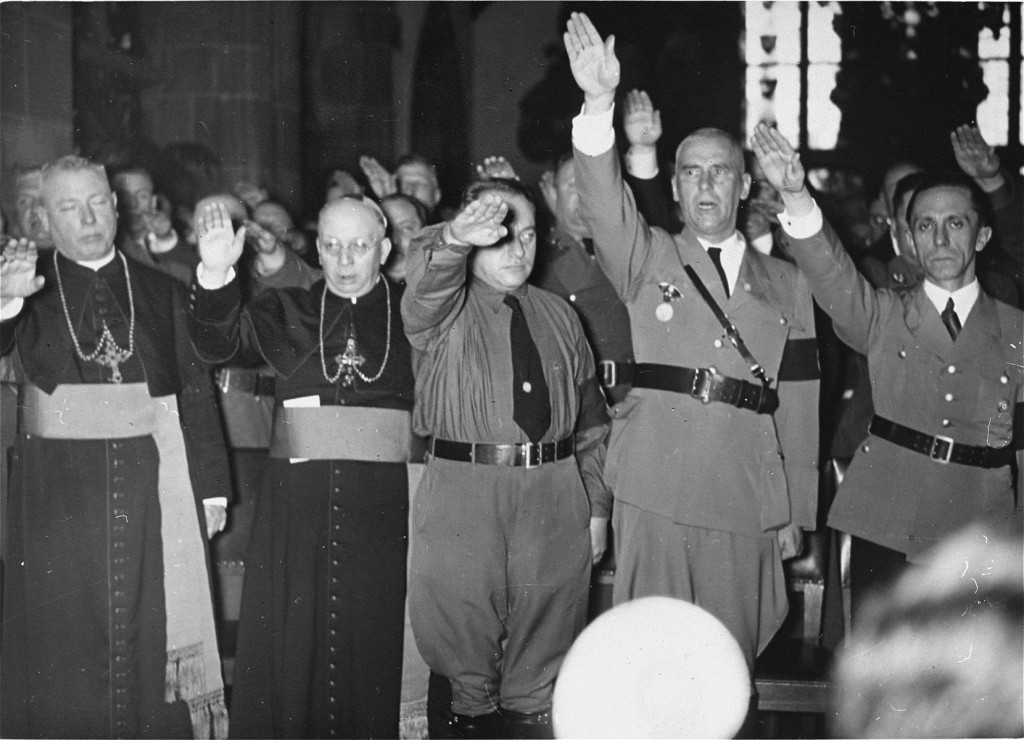
In 1933, Germany was home to approximately 60 million people, with the majority identifying as Christian—either Roman Catholic or Protestant. The Jewish community represented less than 1% of the population. As the Nazi regime rose to power, it introduced racialized anti-Jewish laws, resonating with pre-existing antisemitism in Europe, which had deep roots in Christian history. Many Christians interpreted traditional religious texts as supporting these prejudices.
The response of German Christians to Nazism was influenced by various factors, including religious beliefs and nationalistic sentiments. The Nazi Party Platform’s point 24 on “positive Christianity” was interpreted by many as aligning with Christian values, despite its antisemitic undertones. This statement linked confessional freedom with a nationalistic and racialized morality, which appealed to many Christians at the time.
The German Evangelical Church, the largest Protestant church in Germany, comprised 28 regional churches and included Lutheran, Reformed, and United traditions. Historically, this church saw itself as a pillar of German culture and society, with a tradition of loyalty to the state. Within this context, a movement called the Deutsche Christen, or “German Christians,” emerged, embracing nationalistic and racial aspects of Nazi ideology. They advocated for a “nazified” version of Christianity and supported the creation of a national “Reich Church.”
In opposition, the Bekennende Kirche, or “Confessing Church,” arose, asserting that the church’s allegiance was to God and scripture, not to any worldly leader. This led to a Kirchenkampf, or “church struggle,” within the German Evangelical Church, highlighting the tension between those who supported Nazi ideology and those who opposed it. This period serves as a sobering reminder of the complex interplay between faith, politics, and morality, echoing the biblical call for justice and truth (Micah 6:8).
Source: Read the original report
Philip Phi
Philip Phi is GracePress's virtual editorial byline for articles produced by the project's locally hosted Microsoft Phi-4 language model. He does not independently report, interview sources, or witness events. Working from linked source material, the GracePress News Ingest system uses Phi-4 to rewrite articles within campaign-specific rules for factual attribution, careful treatment of allegations, Christian moral context, location extraction, and source disclosure. Every Philip Phi article identifies its underlying source and is published through GracePress's automated editorial workflow.