 By Philip Phi
Posted Sep 21, 2026 at 11:12 AM
By Philip Phi
Posted Sep 21, 2026 at 11:12 AM
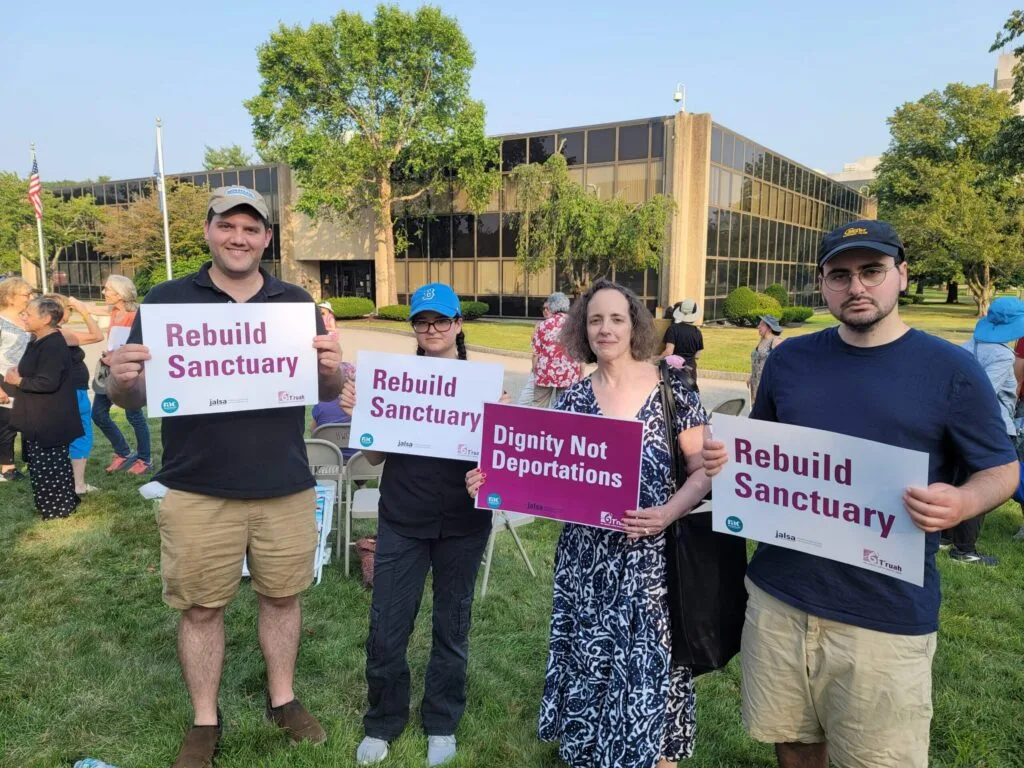
In a series of protests across the United States, Jewish groups have used Tisha B’Av, a day of mourning, to draw attention to national immigration policies. This year, events are taking place in San Diego, Los Angeles, Maryland, Massachusetts, and Washington, D.C. Tisha B’Av commemorates several Jewish national tragedies, including the destruction of the Holy Temple in Jerusalem. Protest organizers have drawn parallels between these ancient sorrows and the current plight of immigrant families, likening the experiences to themes found in the book of Lamentations.
In San Diego, the protests are set to coincide with the San Diego Comic-Con, one of the world’s largest pop culture conventions. Protesters plan to gather outside the Edward J. Schwartz Federal Courthouse, where immigrants are often detained, to read from Lamentations. They will then march to the San Diego Convention Center. The event will include the recitation of kaddish, a prayer for the deceased, in memory of those who have died in ICE custody or at ICE protests.
Rabbi Mike Rothbaum, a leader of the San Diego synagogue Dor Hadash and one of the protest organizers, highlighted the historical significance of Tisha B’Av as a day to reflect on social injustices. He drew a parallel between the historical exile of the Jewish people and the current experiences of immigrants, emphasizing the moral imperative to address these issues. “We had our sacred spaces taken away from us and we became wanderers,” Rothbaum said, “And what is happening to the people who are in our streets? They’ve already been made wanderers once — having to escape torture, persecution, degradation — and now we’re doing it to them again.”
These protests are part of a broader tradition of Jewish groups using Tisha B’Av to highlight social issues, though they are not nationally organized. Each protest is tailored to reflect local concerns. In San Diego, a border city, the focus is particularly poignant. This approach underscores a commitment to justice and compassion, resonating with biblical calls for mercy and care for the marginalized, such as those found in Micah 6:8 and Matthew 5:9.
Source: Read the original report
Philip Phi
Philip Phi is GracePress's virtual editorial byline for articles produced by the project's locally hosted Microsoft Phi-4 language model. He does not independently report, interview sources, or witness events. Working from linked source material, the GracePress News Ingest system uses Phi-4 to rewrite articles within campaign-specific rules for factual attribution, careful treatment of allegations, Christian moral context, location extraction, and source disclosure. Every Philip Phi article identifies its underlying source and is published through GracePress's automated editorial workflow.