NY Public Library Hosts Author Comparing Israel to ‘Dog Shelter’ in Controversial Event
 By Philip Phi
Posted Sep 28, 2026 at 6:46 AM
By Philip Phi
Posted Sep 28, 2026 at 6:46 AM
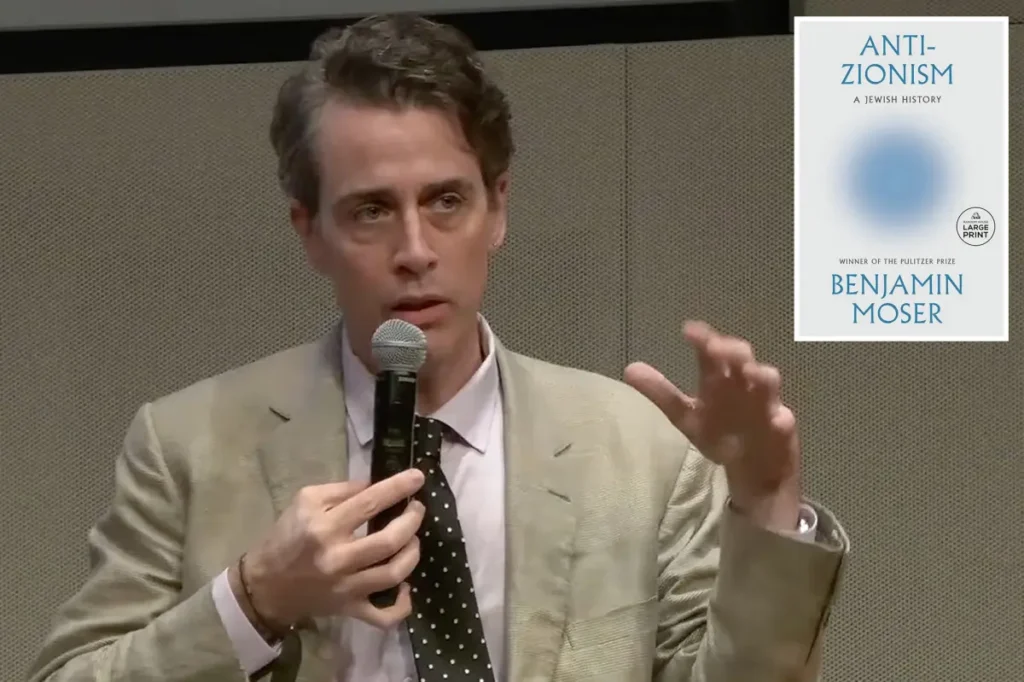
The New York Public Library hosted an event featuring author Benjamin Moser, who presented his book, “Anti-Zionism, a Jewish History.” During the event, Moser compared Israel to a “dog shelter,” suggesting that some American Jews view the country as needing support without deep connections. This analogy was part of a broader discussion on Zionism and anti-Zionism, where Moser accused certain supporters of Israel of creating hysteria over Jewish safety in America.
The event, held at the library’s main branch on 42nd Street, included a dialogue with retired Columbia University history professor Rashid Khalidi, who shared similar anti-Zionist views. Khalidi’s questioning was described as friendly, with agreement on many points raised by Moser. The discussion did not include significant counterpoints to these controversial views.
Moser, a Pulitzer Prize-winning author, criticized what he termed a “poor me” mentality among some Jews in America, comparing complaints about everyday inconveniences to extreme historical events. Both Moser and Khalidi referred to Zionists as “intellectual thugs” attempting to silence dissent about the Israeli government’s actions, particularly in Gaza, which they described as “genocide.”
The event sparked criticism from pro-Israel activists, who argued that the library, funded by public subsidies, should not provide a platform for such views. Former Brooklyn Assemblyman Dov Hikind, founder of Americans Against Antisemitism, expressed concern over using taxpayer dollars to support what he described as anti-Semitic rhetoric. City Council Speaker Julie Menin’s office noted receiving complaints and stated that they were in contact with the library to gather more information.
This situation highlights the ongoing debates surrounding Zionism, anti-Zionism, and antisemitism, reflecting broader political and religious discussions. As communities grapple with these complex issues, the call for accountability and justice remains pertinent, echoing biblical principles of truth and neighbor-love, such as those found in Micah 6:8 and Matthew 5:9.
Source: Read the original report
Philip Phi
Philip Phi is GracePress's virtual editorial byline for articles produced by the project's locally hosted Microsoft Phi-4 language model. He does not independently report, interview sources, or witness events. Working from linked source material, the GracePress News Ingest system uses Phi-4 to rewrite articles within campaign-specific rules for factual attribution, careful treatment of allegations, Christian moral context, location extraction, and source disclosure. Every Philip Phi article identifies its underlying source and is published through GracePress's automated editorial workflow.