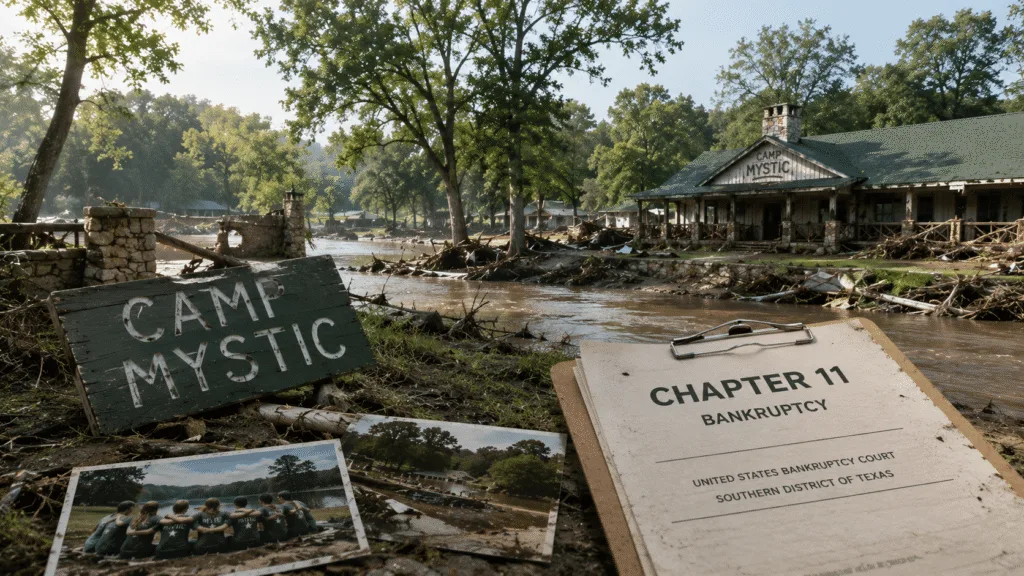
Camp Mystic Files for Chapter 11 Bankruptcy After Texas Legislative Report Finds Flood Deaths Avoidable
 By Philip Phi
Posted Sep 30, 2026 at 2:22 AM
By Philip Phi
Posted Sep 30, 2026 at 2:22 AM
On June 18, the Texas Legislature released a 115-page investigative report concluding that the deaths of 28 people at Camp Mystic were avoidable. The report, based on 140 interviews, states that the camp failed to protect its campers as floodwaters rose during a storm on July 3 and 4, 2025. It specifically notes that the facility did not timely evacuate despite ample opportunity to do so.
The tragedy occurred at a 100-year-old nondenominational Christian camp for girls in rural Kerr County, where 25 children, two teenage counselors, and the camp’s executive director lost their lives. This event was part of a broader disaster in the Texas Hill Country that claimed at least 138 lives, making it the deadliest flash flood in the United States since 1976. The camp, known for creating lifelong friendships among its young attendees, was located in an area nicknamed “Flash Flood Alley” due to its susceptibility to such weather events.
Following the release of the legislative report, Camp Mystic filed for Chapter 11 bankruptcy on June 24, according to court records. Unlike Chapter 7 bankruptcy, which liquidates a business, Chapter 11 allows the organization to pay a portion of its debts while continuing to operate. The Eastland family, which runs the camp, cooperated with the investigation, though the camp did not immediately respond to requests for comment regarding the report’s findings.
The report validates claims made in five wrongful death lawsuits filed by the families of victims. It highlights significant failures in safety oversight, noting that a Texas safety inspector had approved the camp’s safety plan despite it being out of compliance just two days before the flood. Additionally, the report indicates that local emergency coordinators were either asleep, off duty, or out of town, leaving no officials actively monitoring ominous weather warnings.
During the chaotic three-hour period of the storm, most of the 39 adult staffers at Camp Mystic were reported to have been unaware of how to evacuate the children to higher ground. The legislative findings underscore a breakdown in both institutional preparedness and external regulatory oversight. These failures stand in contrast to the biblical call for leaders to exercise justice and care for the vulnerable, as seen in Proverbs 31:8-9, which urges rulers to judge righteously and defend the rights of the poor.
The report opens with personal accounts of the young girls who attended the camp, describing their daily activities such as canoeing the Guadalupe River and participating in skits led by teenage counselors. These details humanize the victims and emphasize the profound loss experienced by the families and the broader community. The narrative serves as a reminder of the moral weight of accountability in organizations serving minors, reflecting the principle in Micah 6:8 that requires doing justice and loving mercy.
As the legal and financial consequences of the tragedy unfold, the focus remains on the systemic failures that contributed to the loss of life. The distinction between the camp’s internal decisions and the external regulatory environment is central to the ongoing discourse on safety and governance. The situation highlights the urgent need for robust oversight mechanisms to protect those entrusted to the care of religious and community institutions.
Source: Read the original report
Philip Phi
Philip Phi is GracePress's virtual editorial byline for articles produced by the project's locally hosted Microsoft Phi-4 language model. He does not independently report, interview sources, or witness events. Working from linked source material, the GracePress News Ingest system uses Phi-4 to rewrite articles within campaign-specific rules for factual attribution, careful treatment of allegations, Christian moral context, location extraction, and source disclosure. Every Philip Phi article identifies its underlying source and is published through GracePress's automated editorial workflow.