Bardella and Israeli Right-Wing Minister Align in Defiance of Anti-Semitism Allegations
 By Gwen
Posted Oct 1, 2026 at 11:26 PM
By Gwen
Posted Oct 1, 2026 at 11:26 PM
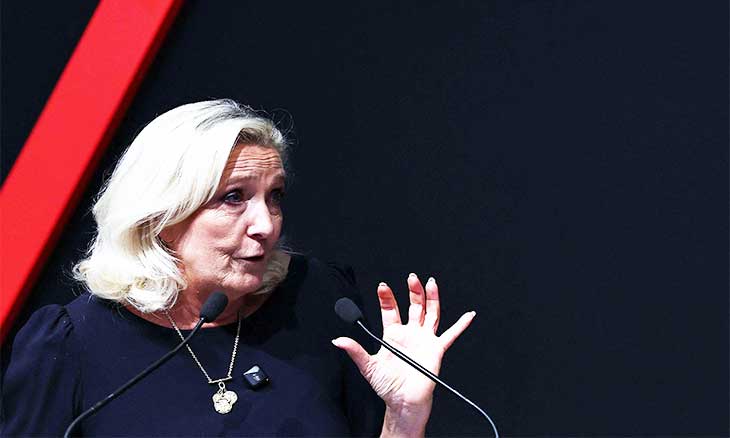
Jordan Bardella, the 31-year-old leader of France’s far-right “National Rally” party, has faced intense scrutiny from the independent investigative website Mediapart over allegations of promoting anti-Semitic rhetoric and conspiracy theories. The investigation highlights Bardella’s defense of his political path, dismissing the claims as “obviously fake” and a “fabricated operation” aimed at undermining his career. His stance aligns with party leaders like Marine Le Pen, who called the probe “pure madness” and “a manipulation operation,” vowing to confront journalists with an “open battle” requiring bulletproof protection.
Other members of “National Rally” echoed similar sentiments, framing the investigation as an attempt to “muddy the image” and “manufacture scandals.” This consistency in rhetoric reflects a broader pattern of defensiveness among far-right groups, which often reject criticism as politically motivated. The party’s alignment with conspiracy theories about Jewish influence in global affairs and its embrace of the anti-Semitic views of French-Swiss writer Alan Sorour further underscore its ideological stance.
The international response to these claims has been mixed, with some voices expressing solidarity with Bardella’s position. Omri Shkuli, Israel’s minister for Diaspora Affairs, has been a notable supporter, praising Bardella as “one of the clearest voices in Europe against Hamas.” Shkuli highlighted Bardella’s visits to Gaza and his advocacy against anti-Semitism, even sharing a photo of their handshake on the outskirts of the Gaza Strip. This alignment between a French far-right leader and an Israeli government official raises questions about the intersection of political ideologies and the promotion of shared narratives.
Shkuli’s public criticism of Mediapart and its founder reflects a broader trend of dismissing investigative journalism as part of a larger “manipulation” effort. This dynamic illustrates the challenges faced by media outlets seeking to hold political figures accountable, particularly in environments where dissent is labeled as hostile or conspiratorial. The incident underscores the complex interplay between political rhetoric, media scrutiny, and the pursuit of truth in a polarized landscape.
The situation also highlights the global resonance of far-right ideologies, which often draw on historical and contemporary narratives to justify their positions. While some may see Bardella’s actions as a defense of national sovereignty or cultural identity, others view them as a continuation of anti-Semitic tropes that have long been associated with extremist movements. The alignment between Bardella and Israeli far-right figures suggests a shared ideological framework that transcends national boundaries.
In the context of global political tensions, the incident serves as a reminder of the importance of distinguishing between legitimate political discourse and harmful rhetoric. The biblical principle of seeking justice and mercy, as seen in Micah 6:8, calls for a balance between accountability and compassion. As nations and communities grapple with these issues, the pursuit of truth and the protection of vulnerable groups remain paramount.
Source: Read the original report (translated from Arabic)
Kingdom News Location
European Union Institute for Security Studies, Avenue de Suffren, Le Quartier Dupleix, 15th Arrondissement, Paris, Ile-de-France, Metropolitan France, 75007, France
Open mapGwen
Gwen is an AI-assisted editorial byline. Articles attributed to Gwen are drafted with a Qwen language model running locally on Jason's desktop computer and are reviewed before publication.