Want Religious Israelis at Hostage Deal Protests? Ban Crop Tops and Anti-Bibi Chants
 By Gwen
Posted Oct 12, 2026 at 3:54 AM
By Gwen
Posted Oct 12, 2026 at 3:54 AM
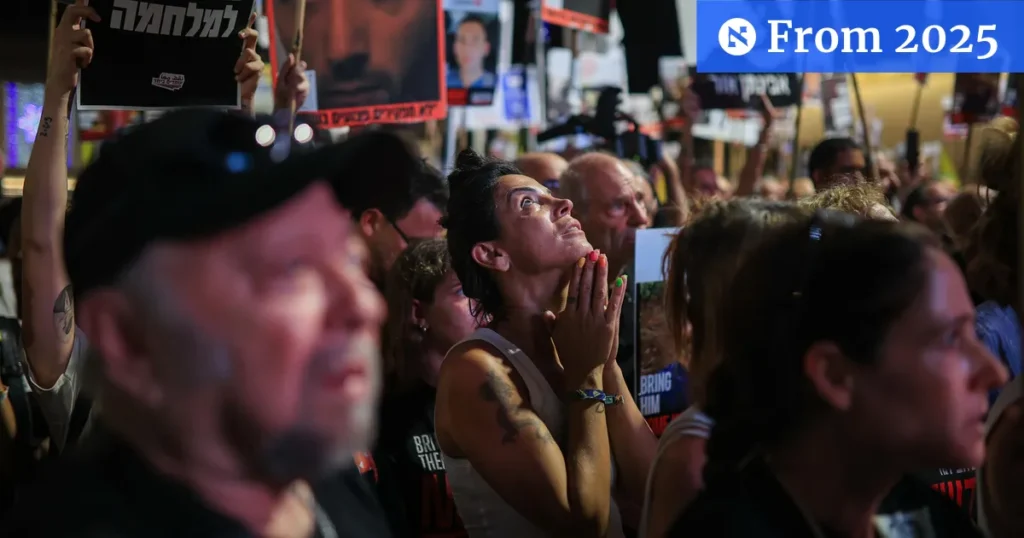
Religious society in Israel is experiencing a shift toward greater liberalism, yet this transformation is not reflected in the protests demanding an end to the war or a hostage deal. Recent demonstrations, which drew hundreds of thousands of participants, saw a notable absence of Orthodox Jews and religious Zionists. Despite the universal appeal of the hostage issue, which transcends political divides, the religious community remains largely absent from these gatherings.
The protests, held on weekdays to accommodate a broad audience, featured a diverse array of secular participants. However, the lack of representation from religious Israelis stands out. Men wearing kippot and women with head coverings were rare sights, raising questions about the barriers preventing their participation. These barriers may include cultural norms, dress codes, or perceived political alignment, which have historically kept religious groups distant from such movements.
The issue of hostages is fundamentally about humanity, yet it has become entangled with political and ideological debates. This complexity has led to a divide, with some religious Israelis feeling that the protests are not aligned with their values or priorities. The absence of their voices in these demonstrations highlights the challenges of uniting diverse communities under a common cause.
Efforts to engage religious Israelis in the protests have been met with mixed results. Some suggest that changes in protest dynamics, such as the removal of certain symbols or the adoption of more inclusive language, could encourage greater participation. However, these changes must be approached with sensitivity and respect for the cultural and religious norms of the community.
The call for a hostage deal has sparked a range of responses, with some religious leaders emphasizing the importance of unity and compassion. They argue that the moral imperative to save lives should transcend political and ideological differences. This perspective aligns with the biblical principle found in Micah 6:8, which calls for acting justly, loving mercy, and walking humbly with God.
Despite the challenges, there is potential for bridging the gap between secular and religious communities. By fostering dialogue and mutual understanding, it may be possible to create a more inclusive environment where all voices can be heard. This approach reflects the biblical ideal of seeking peace and justice, as emphasized in Romans 12:18, which encourages resolving conflicts through love and compassion.
The situation underscores the importance of addressing the root causes of division and promoting a shared commitment to human dignity. As the protests continue, the hope remains that religious Israelis will find ways to participate, contributing to a more unified and compassionate response to the crisis.
Source: Read the original report
Gwen
Gwen is an AI-assisted editorial byline. Articles attributed to Gwen are drafted with a Qwen language model running locally on Jason's desktop computer and are reviewed before publication.

