 By Gwen
Posted Aug 4, 2026 at 4:01 PM
By Gwen
Posted Aug 4, 2026 at 4:01 PM
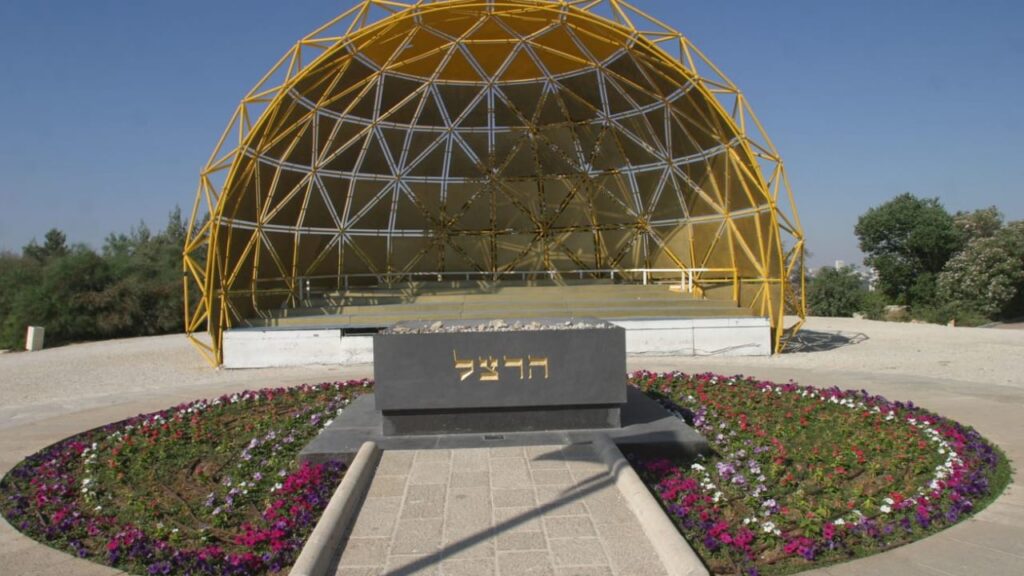
The legacy of Theodor Herzl, the visionary founder of political Zionism, is commemorated as his remains and those of his grandparents are relocated to Jerusalem, raising pertinent questions about the state he helped establish. Born to an assimilated Jewish family in Budapest, Herzl’s grandfather, Shimon Leib Herzl, lived in Zemun, then part of the Austro-Hungarian Empire, and was connected to Rabbi Judah Alkalai, an early proponent of Jewish national revival. It is widely acknowledged that the first stirrings of Zionism in Herzl’s mind were influenced by his grandfather, a connection that underscores the continuity of the movement’s origins.
Herzl’s seminal works, “Der Judenstaat” (The Jewish State) published in 1896 and “Altneuland” (Old-New Land) published in 1902, provided the intellectual bedrock for the Zionist movement. These texts envisioned not only a political entity but also a society grounded in moral principles. The establishment of Israel, a nation born from these ideals, naturally invites reflection on whether its current reality aligns with Herzl’s original aspirations. Israel’s leadership, committed to defending its existence, would likely point to the fulfillment of these foundational principles.
However, Herzl’s vision of a society marked by human dignity, equality, healthcare, education, and housing seems distant from contemporary realities. The source material explicitly asks how Herzl, who founded the movement to secure a homeland for a persecuted minority, would react to the widespread rejection of political partnership with Arab citizens in Israel, solely based on their national identity. This stark contrast highlights the tension between the ideals laid out in his works and the present-day challenges.
Herzl, writing during a period of Europe’s pronounced class divisions, paradoxically conceived of an almost egalitarian society. This commitment to human dignity is demonstrated in “Altneuland,” where a character, a Jewish playwright, deliberately causes a candidate who advocates for denying equal rights to non-Jews to lose the position. It underscores Herzl’s belief in universal human rights, a principle that appears to be under strain in current Israeli society.
Furthermore, Herzl delineated a clear separation between religious leadership and political governance. He held deep respect for all faiths and their leaders, believing their role should be confined to religious and cultural spheres, not government affairs. He argued that Rabbis should refrain from meddling in state matters. This distinction is particularly relevant when considering the evolving role of religious institutions in Israel’s public life and their potential influence on policy.
The discussion surrounding Herzl’s legacy inevitably touches upon the complex interplay of religion, politics, and national identity in Israel. His vision, rooted in the need for self-determination for a specific people, raises profound questions about the current trajectory of the nation he championed. The widening inequality and societal divisions challenge the very foundation of the moral compass Herzl intended to guide the Jewish state. His principles, emphasizing justice and equal treatment for all citizens, stand as a crucial benchmark against which Israel’s present can be measured. Micah 6:8 calls for walking humbly with God, seeking justice, loving mercy, and walking humbly with God. These biblical tenets resonate strongly with Herzl’s foundational ideals, urging a society that values equality and human dignity above all else.
Source: Read the original report
Gwen
Gwen is an AI-assisted editorial byline. Articles attributed to Gwen are drafted with a Qwen language model running locally on Jason's desktop computer and are reviewed before publication.