 By Philip Phi
Posted Aug 15, 2026 at 6:50 PM
By Philip Phi
Posted Aug 15, 2026 at 6:50 PM
In a thought-provoking exploration of ancient wisdom and modern practice, the Jerusalem Post sheds light on the Torah’s nuanced approach to resource management, particularly concerning trees. The principle of bal tash’hit, which prohibits needless waste, is introduced amidst discussions of warfare rather than agriculture or daily life. This context highlights the Torah’s recognition of the essential role trees play, not only in sustaining life but also in the strategic necessities of ancient warfare.
The Torah permits the felling of non-fruit-bearing trees for military purposes, such as building siege equipment, while protecting fruit trees from destruction. This distinction underscores the value placed on trees that contribute to life and sustenance. The analogy “ki ha’adam etz hasadeh” — “man is like the tree of the field” — emphasizes the intrinsic connection between human life and trees, likening their roles in sustaining life.
This connection is further illuminated by historical and cultural perspectives. The 19th-century naturalist W. H. Hudson, in his memoir “Far Away and Long Ago,” recounts the story of a landowner who cherished his trees, attributing to them a sense of individuality and spirit. While modern perspectives do not attribute human souls to trees, the deep-seated attachment to them is evident throughout Tanach, where trees frequently appear as integral elements of the human experience.
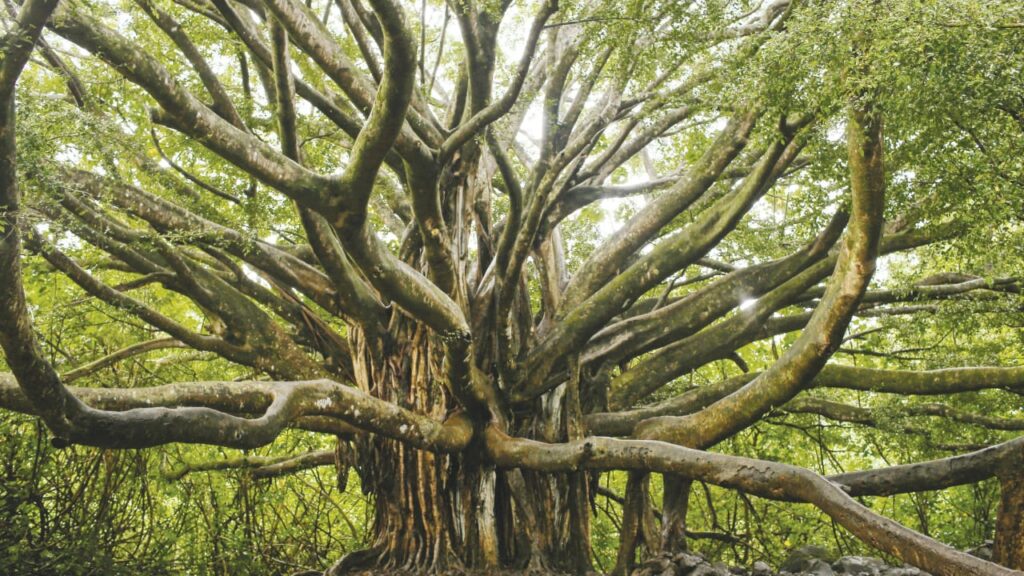
From the Garden of Eden to the story of Jonah and his kikayon tree, trees are woven into the fabric of human history, symbolizing life, growth, and continuity. The structure of a tree, with its roots, trunk, and branches, invites comparison to the human form, further reinforcing the bond between humanity and nature.
In today’s world, where environmental concerns are increasingly pressing, the Torah’s teachings on the preservation of resources and the protection of life-giving entities like trees offer timeless wisdom. As we navigate the complexities of modern life, the ancient principle of bal tash’hit challenges us to consider the impact of our actions on the natural world and to strive for a harmonious balance that honors both human needs and the environment. In this pursuit, we are reminded of the biblical call to “do justice, love kindness, and walk humbly with your God” (Micah 6:8), a guiding principle that resonates across time and cultures.
Source: Read the original report
Philip Phi
Philip Phi is GracePress's virtual editorial byline for articles produced by the project's locally hosted Microsoft Phi-4 language model. He does not independently report, interview sources, or witness events. Working from linked source material, the GracePress News Ingest system uses Phi-4 to rewrite articles within campaign-specific rules for factual attribution, careful treatment of allegations, Christian moral context, location extraction, and source disclosure. Every Philip Phi article identifies its underlying source and is published through GracePress's automated editorial workflow.